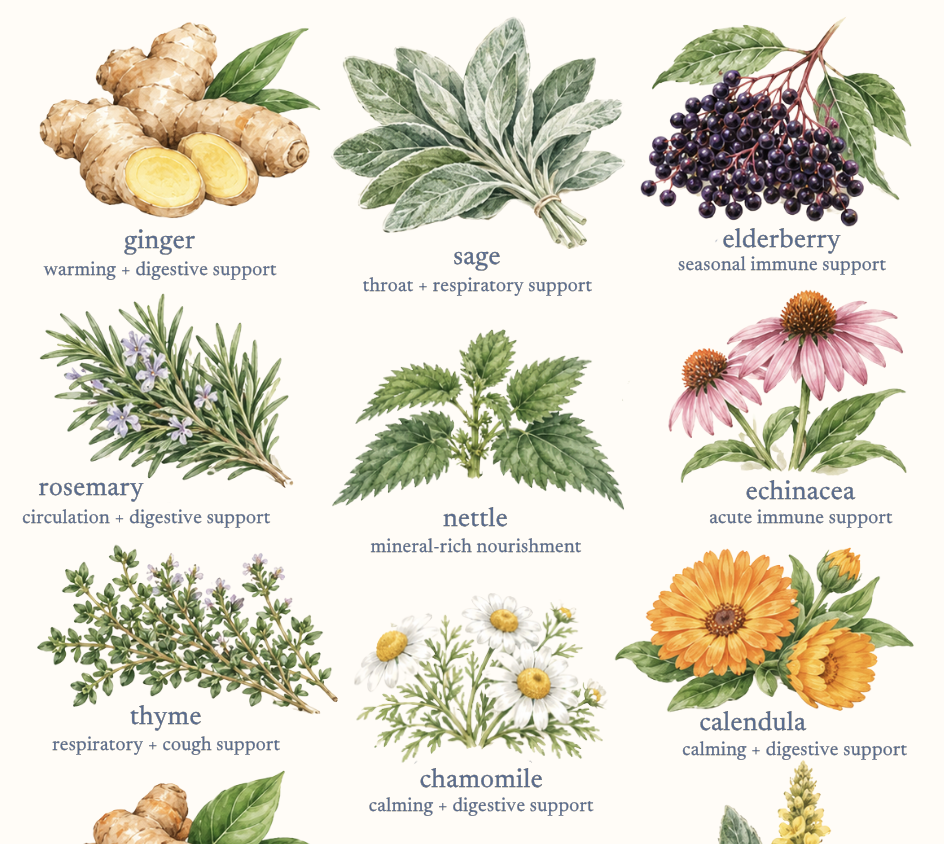
Herbs You’ll Want on Hand for Fall Wellness
Fall is one of my favorite seasons to lean into simple herbal support. As the weather cools, the days shorten, and we spend more time indoors, our bodies naturally begin adapting to a different season. This is often when we start reaching for warming foods, hot tea, nourishing soups, and simple remedies that support the respiratory system, digestion, immune resilience, circulation, and overall vitality.
From a vitalistic naturopathic perspective, herbs are not simply isolated compounds used to suppress symptoms. They are part of a much older tradition of working with nature to support the body’s own healing processes. Many of the plants we use during fall and winter are warming, aromatic, mineral-rich, soothing, or gently stimulating in ways that beautifully complement the needs of the season.
I love keeping a small collection of herbs in the kitchen and medicine cabinet that can be used in teas, infusions, broths, syrups, steams, gargles, and other simple preparations. You do not need dozens of complicated products to begin using botanical medicine at home. A handful of well-chosen herbs can go a very long way.
These are some of my favorites for fall wellness.
Ginger
Ginger is one of the simplest and most useful herbs to keep on hand throughout the cooler months. Its warming nature makes it especially lovely in fall and winter, when many of us naturally gravitate toward foods and drinks that feel more grounding and warming.
Traditionally, ginger has been used to support digestion, circulation, nausea, and respiratory comfort. It can be especially helpful after heavier meals or when digestion feels sluggish. Its aromatic and warming qualities also make it a beautiful addition to tea when you are feeling chilled or simply want to support circulation and overall comfort.
One of my favorite things about ginger is how accessible it is. Fresh ginger root can easily be sliced or grated into hot water, added to soups and broths, incorporated into stir-fries, or combined with lemon and raw honey for a simple seasonal tea. It is a wonderful example of kitchen medicine because it blurs the line between food and remedy.
From a vitalistic perspective, this is part of what makes botanical medicine so beautiful. The same plant can nourish, warm, stimulate, and support the body in multiple ways rather than acting through only one isolated pathway.
Sage
Sage is another beautiful herb for the fall season, particularly for throat and respiratory support.
Its aromatic oils and naturally astringent qualities have traditionally made it useful in gargles and teas when the throat feels irritated or uncomfortable. A warm sage tea can also feel deeply soothing during the cooler months, especially when combined with honey.
Sage has a long history as both a culinary herb and medicinal plant, which again makes it incredibly easy to incorporate into everyday life. It can be used fresh or dried in cooking, added to soups and roasted vegetables, or prepared as a simple tea or gargle.
I love herbs like sage because they remind us that medicine does not always need to come from a separate cabinet. Sometimes the plants sitting in our spice drawer or growing in the garden are the very same plants traditionally used to support the body through seasonal changes.
Elderberry
Elderberry is one of the herbs most people immediately associate with fall and winter, and for good reason. Traditionally, elderberries have been used during cold and flu season as part of seasonal immune support.
Elderberry syrup is probably the most familiar preparation, but elderberries can also be made into teas, decoctions, and other herbal preparations. They are rich in naturally occurring plant pigments called anthocyanins, which contribute to their deep purple color.
I personally love elderberry as part of a larger seasonal wellness toolkit rather than viewing it as a magic solution for preventing every illness. The immune system is supported by so much more than one herb. Sleep, nourishment, hydration, stress, sunlight, movement, and exposure to nature all matter too.
Herbs can beautifully complement those foundations.
If you are making elderberry preparations at home, it is also important to know that raw or improperly prepared elderberries, leaves, stems, and other parts of the plant can cause gastrointestinal symptoms, so elderberries should be properly cooked and prepared before use.
Rosemary
Rosemary is one of my favorite herbs to use throughout fall because it is warming, aromatic, and incredibly versatile.
Traditionally, rosemary has been used to support circulation and digestion. Its strong aroma and warming quality make it particularly lovely during cooler weather, and it pairs beautifully with many classic fall foods including squash, root vegetables, potatoes, soups, roasted meats, and homemade breads.
It can also be prepared as a tea, used in herbal steams, or infused into oils for topical use.
Rosemary is another perfect example of why I love kitchen medicine. You do not necessarily need to think of herbs as something separate from everyday nourishment. Using generous amounts of culinary herbs throughout your meals is one of the easiest ways to begin bringing more plant medicine into your home.
There is also something deeply grounding about preparing seasonal food with herbs that have been used for generations. It reconnects us to the rhythms of the season and to a form of medicine that is simple, practical, and close to the earth.
Echinacea
Echinacea is often associated with immune support and is traditionally used during the early stages of acute illness.
Rather than thinking of echinacea as something that must be taken every single day throughout the entire winter, I tend to think of it more as an herb to understand and know how to use when it is actually appropriate.
Different parts of the plant have been used traditionally, including the root and aerial portions, and preparations may vary significantly in strength and quality. This is one reason herbal medicine is much more nuanced than simply seeing the name of an herb on a bottle and assuming all preparations are interchangeable.
Botanical medicine is about understanding the plant, the preparation, the person, and the context.
That is also one of the reasons I believe mothers benefit so much from learning these tools rather than simply collecting remedies. Knowing why you are using something, when it fits, how to prepare it, and when something more is needed is far more valuable than having a cabinet full of products you are unsure how to use.
Thyme
Thyme is one of my favorite respiratory herbs to keep in the kitchen during fall and winter.
Traditionally, thyme has been used to support the respiratory tract and coughs, particularly because of its aromatic volatile oils. It can be incorporated into food generously, but it can also be steeped into tea or included in herbal steam preparations.
Like rosemary and sage, thyme is a wonderful example of a culinary herb with a long medicinal tradition.
One of the simplest ways to use it is to steep fresh or dried thyme in hot water and add a little raw honey once the tea has cooled slightly. It can be especially comforting when the throat or chest feels irritated.
Thyme also pairs beautifully with garlic, onion, rosemary, and warming broths, making it an easy herb to integrate into meals during cold and flu season.
Calendula
Calendula is such a gentle and beautiful herb to have around the home.
It is most commonly known for its soothing topical uses, particularly for the skin, but it also has a long traditional history of use for digestive and lymphatic support. Calendula flowers can be infused into oils, salves, teas, washes, and other preparations depending on the intended use.
Topically, calendula is one of those herbs I love having available for minor skin irritation and everyday family first-aid situations. It is also such a visually beautiful plant, with its bright orange and yellow flowers, and I think there is something special about using medicines that still look like the living plants they came from.
For mothers building a natural medicine cabinet, calendula is one of those foundational herbs worth getting to know because it is simple, versatile, and easy to incorporate into home care.
Chamomile
Chamomile is one of the gentlest and most beloved herbs for a reason.
Traditionally, chamomile has been used for calming, digestive support, and relaxation. It is particularly lovely in the evening or during seasons when the nervous system feels overstimulated.
Fall can be a beautiful season, but it can also become incredibly busy. School schedules pick up, holidays approach, routines shift, and many families begin spending more time indoors. Chamomile is a wonderful reminder that supporting health is not always about stimulating the immune system or trying to “fight” something.
Sometimes health support looks like helping the body settle.
A warm cup of chamomile tea in the evening can be a simple ritual that supports relaxation, digestion, and the transition toward sleep.
This is one of the things I love about herbal medicine. Some plants gently stimulate. Others soothe. Others nourish. The goal is not always to push the body harder, but to understand what kind of support it needs.
Turmeric
Turmeric has become incredibly popular in the wellness world, but it has been used traditionally for generations.
Its characteristic golden color comes largely from curcuminoids, including curcumin, and it is often discussed for its antioxidant and inflammatory-supportive properties.
I especially love turmeric as a food rather than thinking of it only as an isolated supplement. Fresh turmeric root can be grated into soups, curries, broths, rice dishes, smoothies, or warming beverages. Dried turmeric is also easy to incorporate into everyday cooking.
Fall is a perfect season for turmeric because it pairs so beautifully with warming spices such as ginger, cinnamon, black pepper, and cardamom.
There is something important about remembering that many medicinal plants were historically consumed as part of food and daily life rather than only concentrated into capsules. Food-based herbal use can be one of the simplest ways to consistently expose the body to a broad range of naturally occurring plant compounds.
Nettle
Nettle is less flashy than some of the other herbs on this list, but it is one of my absolute favorites because of how deeply nourishing it can be.
Nettle leaf contains a variety of minerals and plant compounds and has traditionally been used as a nutritive herb. Rather than thinking of nettle primarily as something that “treats” a particular symptom, I think of it as a plant that helps provide nourishment.
This distinction is especially important from a vitalistic perspective.
The body does not only need things that stimulate or suppress specific processes. It needs raw materials. It needs minerals. It needs nourishment. It needs the basic building blocks required to carry out normal physiology.
Nettle infusions are one of my favorite ways to incorporate this kind of herbal nourishment. A longer infusion can extract more of the plant’s mineral content than a quick tea, making it a beautiful option for women who enjoy incorporating nourishing herbs into their daily routines.
Mullein
Mullein is another classic respiratory herb and one that I especially love having available during the cooler months.
Traditionally, mullein leaf has been used as a soothing respiratory herb. It is often included in teas and formulas intended to support the lungs and respiratory tract, particularly when there is irritation or dryness.
One important practical note with mullein is that the leaves contain tiny hairs, so teas should be strained very thoroughly through a fine filter or cloth before drinking.
Mullein is also a wonderful example of why learning herbal preparation matters. Knowing an herb’s name is only the beginning. Understanding which part of the plant is used, how it is prepared, how much is appropriate, and what precautions exist are all part of using botanical medicine responsibly.
Fall Wellness Is About More Than Taking Herbs
As much as I love herbs, I never want them to become another version of the quick-fix mentality.
From a vitalistic naturopathic perspective, seasonal wellness is about creating the conditions that allow the body to remain resilient.
That includes adequate sleep, nourishing seasonal foods, time outside, sunlight exposure, hydration, movement, minimizing unnecessary stress, and allowing the body time to rest when illness does arise.
Herbs can complement those foundations beautifully, but they do not replace them.
I also think this matters especially for children. Childhood illness is not always evidence that something has gone wrong. The immune system is learning, adapting, and responding throughout childhood. Our role is not necessarily to suppress every symptom immediately, but to understand what the body is doing, support hydration and nourishment, provide comfort, monitor appropriately, and know when medical evaluation is needed.
That same philosophy applies to adults too.
Health is not the complete absence of symptoms.
Health is also the body’s ability to respond, adapt, recover, and return toward balance.
Building a Simple Herbal Home Apothecary
You do not need to buy every herbal product you see online to begin caring for your family more naturally.
Start with a few plants and actually learn them.
Learn what they taste like. Learn whether they are warming or cooling. Learn what part of the plant is used. Learn how to prepare them as tea, infusion, syrup, oil, or food. Learn when they are useful and when they are not.
A simple fall apothecary could include ginger for warmth and digestion, sage and thyme for the throat and respiratory system, elderberry and echinacea as seasonal immune herbs, chamomile for calming and digestion, calendula for gentle skin support, rosemary and turmeric in everyday cooking, nettle for nourishment, and mullein as a respiratory herb.
That small group of plants can already teach you an incredible amount.
And over time, these tools begin to feel less foreign.
Instead of seeing every sniffle, cough, upset stomach, or stressful evening as something that immediately requires a new product, you begin understanding the different forms of gentle support already available within your kitchen and medicine cabinet.
To me, that is one of the most empowering parts of natural medicine.
This Is Exactly Why I Created the Natural Motherhood Collective
One of the greatest reasons I created the Natural Motherhood Collective® is because I want women to feel confident actually using tools like these.
It is easy to save an Instagram post about herbs. It is another thing entirely to understand which herb you would choose, how to prepare it, how to use it safely, how it may fit differently for a baby, child, pregnant woman, postpartum mother, or adult, and when something has moved beyond what should be managed at home.
That kind of practical education is what I want mothers to have.
Inside the Natural Motherhood Collective®, we will explore botanical medicine, homeopathy, kitchen medicine, natural first aid, childhood illness support, pregnancy, birth, postpartum, breastfeeding, newborn and infant care, pediatrics, nutrition, motherhood, and so much more. The Collective also includes live educational lectures, office hours where you can bring questions, women’s circles, birth story sharing, guest experts, and a growing library of practical resources you can return to as your family grows. Em Naturopathic
My goal is not simply for you to collect more remedies. I want you to understand the foundations of natural family care so you can become increasingly confident and discerning as the health steward of your own home.
The Natural Motherhood Collective® officially launches January 4, 2027, but Founding Membership is open now. Founding Members can join for $197/year, less than $17/month, and this is the lowest annual membership rate the Collective will offer, as this price will be rising as we get closer to launch. Your founding rate remains locked in for as long as your membership stays active.
If you are a mama, mama-to-be, or approaching this season of life and want to feel more prepared, capable, and confident caring for your family naturally, I would truly love to have you with us.
Become a Founding Member of the Natural Motherhood Collective®
A Note on Herbal Medicine
Herbs are powerful tools, and natural does not automatically mean appropriate for every person or every situation. Pregnancy, breastfeeding, infancy, childhood, medications, allergies, and individual health conditions can all change which herbs or preparations are appropriate. This article is intended for general education and is not individualized medical advice. When you are unsure whether an herb is appropriate for you or your child, work with a qualified healthcare professional who can consider your individual situation.

Vaginal Birth After Two Cesareans: One Mama’s Incredible Birth Story
Can you have a vaginal birth after two Cesareans? Read one mama’s incredible VBAC2C story and learn what it reveals about birth, informed consent, and physiologic care.
Can you have a vaginal birth after two Cesareans? For some women, the answer may actually be yes.
I recently came across the incredible birth story of a mama named Lucie, originally shared on the website of OB/GYN. But what makes her story so remarkable goes far beyond the fact that she ultimately had a vaginal birth after two Cesareans.
Lucie and her husband had spent six years trying to conceive, gone through many fertility treatments, and finally became pregnant with fraternal twins through IVF. During that pregnancy, while her husband was deployed to Iraq, she was told she was “too small” to ever deliver vaginally. She trusted that recommendation and delivered her twins by scheduled Cesarean at 38 weeks.
A few years later, she had a second Cesarean with her third baby, still never having experienced labor.
Then came an unexpected fourth pregnancy.
After two previous Cesareans, three children born through surgery, and never having labored before, Lucie eventually found a physician willing to evaluate her individual circumstances and support a trial of labor. She went into labor spontaneously and vaginally birthed a baby weighing 10 pounds, 15 ounces.
Almost eleven pounds.
Her story immediately caught my attention, not simply because of the size of her baby or because she had a vaginal birth after two Cesareans, but because of everything that happened before that moment. Lucie had spent years being told what her body could not do before her body had ever actually been given the opportunity to try.
Her story is such a beautiful example of why I believe women deserve education, individualized care, thoughtful informed consent, and providers who can respect both the very real risks that exist in birth and the incredible physiology already built into the female body.
This does not mean that every woman with two previous Cesareans should attempt a vaginal birth, nor does it mean every woman will be an appropriate candidate. Birth is deeply individual, and there are circumstances in which a repeat Cesarean is absolutely the safest path for mother and baby. But two previous Cesareans do NOT necessarily mean that vaginal birth is impossible.
To really understand why Lucie’s eventual birth was so meaningful, you have to start six years before her first Cesarean.
Six Years of Trying Before Her First Birth
Lucie’s journey into motherhood had already required an incredible amount of perseverance long before she ever began thinking about how she would give birth. She and her husband had been trying to conceive for six years and had gone through many fertility treatments before finally becoming pregnant with fraternal twins through IVF. After years of heartache and waiting, they were understandably overjoyed to finally be expecting their babies.
Then, at only 12 weeks pregnant, her husband deployed to Iraq. Lucie was suddenly navigating her first full-term pregnancy, carrying twins, while her husband was overseas at war. As if finally becoming pregnant after years of infertility was not emotionally intense enough, she was also preparing to become a mother to two babies while carrying the fear and uncertainty of having her husband deployed.
Eventually, the conversation turned toward delivery. Lucie recalls being told early on that she was “too small” and would never be able to deliver vaginally. At the time, she did not question it. This was her first full-term pregnancy, she had never given birth before, and after six years of trying, multiple fertility treatments, and finally conceiving through IVF, her focus was simply on getting her babies here safely. She trusted her doctor’s expertise and accepted the recommendation.
At 38 weeks, Lucie had a scheduled Cesarean and delivered her twins. Her daughter weighed 6 pounds, 6 ounces, and her son weighed 7 pounds, 14 ounces. Together, she had carried more than 14 pounds of babies. Her husband thankfully made it home in time for the birth, and they were completely overjoyed to finally meet the children they had prayed and waited so long for.
That context matters. This was not simply a woman who had one scheduled Cesarean and later wondered whether she could have a VBAC. She had spent years fighting to become a mother in the first place. By the time delivery came around, she was not approaching birth from a place of wanting to challenge recommendations or explore every possible option. She was grateful to be pregnant, grateful her husband was home, and focused on bringing two long-awaited babies into the world.
Her Second Pregnancy Brought the Question of VBAC
When Lucie’s twins were only 19 months old, she unexpectedly became pregnant again. This pregnancy happened naturally, something she and her husband did not think was possible after everything they had gone through to conceive the twins.
As her pregnancy progressed, her doctor eventually began talking about scheduling another Cesarean. This time, Lucie asked whether she could attempt a vaginal birth after Cesarean, commonly called a VBAC. She was discouraged from doing so.
According to Lucie’s account, she was warned about everything that could go wrong and was even told that if she attempted a VBAC, she would not be able to receive pain medication because she supposedly needed to feel if her uterus was rupturing. That frightened her enough that she scheduled another Cesarean.
At 39 weeks, Lucie delivered another beautiful daughter, this time weighing 8 pounds, 2 ounces. Again, however, she experienced significant bleeding. She remembers lying on the operating table hearing her daughter cry and desperately wanting to hold and comfort her. When they finally brought her baby close, Lucie began speaking to her and she stopped crying. Then the baby was taken away again and began to cry once more.
It was not until recovery that Lucie was finally able to hold her. Her baby was already a couple of hours old. Once again, Lucie was grateful for her healthy child, and once again she found herself longing for something different.
She had now birthed three babies through two Cesareans, but she had never labored. She still did not actually know what her body would do if given the opportunity.
Then Came a Baby They Never Expected
Several years passed. Lucie and her husband still had frozen embryos remaining from IVF and eventually decided to give them the opportunity to become part of their family. They attempted two additional frozen embryo transfers, but neither resulted in pregnancy.
After the physical, emotional, and financial toll of fertility treatments, they decided that chapter of their lives was over. They already had three beautiful children, and they accepted that their family was complete. Lucie grieved the possibility of another baby and eventually reached a place of peace with it.
Then, only a few months later, she started feeling strange. She was so convinced something was wrong with her stomach that she made an appointment with a gastroenterologist. When the office asked whether she could possibly be pregnant, Lucie essentially dismissed the idea. After everything they had gone through with infertility and two recently failed embryo transfers, pregnancy seemed extremely unlikely.
Still, before undergoing additional testing, she picked up a pregnancy test. A faint line appeared. Then another positive test. And another. For five days she kept testing because she could hardly believe what she was seeing.
At eight weeks, she saw her baby’s heartbeat. The baby she thought could not exist was growing inside of her, and this pregnancy would ultimately change the way she understood her own body.
For the First Time, She Began Learning About Vaginal Birth After Cesarean
Lucie’s sister had recently experienced a successful VBAC herself and asked Lucie whether she had considered trying for one. Initially, Lucie thought the idea sounded frightening, but her sister began sharing books and information with her, and Lucie started reading.
She read about labor. She read about vaginal birth after Cesarean. She read women’s birth stories online. Slowly, something started changing. She describes sitting at the computer crying as she read stories of mothers who had vaginal births after Cesareans. She imagined holding her baby immediately after birth. She wanted to bring him directly onto her chest, speak to him, kiss his head, experience skin-to-skin contact, and actually be present for those first moments. She wanted the opportunity to labor.
What I find fascinating about this point in her story is that nothing about her physical body had suddenly changed. Her pelvis had not changed. Her previous Cesarean scars had not disappeared. What changed first was her understanding of what might actually be possible. Education expanded the conversation.
At her next appointment, she asked her OB about attempting a VBAC after two Cesareans. She was immediately told no. Again, the risks were emphasized, and Lucie left knowing that if she wanted to seriously explore this possibility, she was going to need another opinion.
Through her sister and another local mother, she eventually heard about a doctor that may be open to it. She scheduled a consultation and walked into that appointment prepared for another rejection. She explained her history and told him she wanted him to be her physician if he would consider supporting her attempt at vaginal birth.
His response was simple: “Let’s do it.”
That did not mean, “I guarantee you will have a vaginal birth.” It did not mean there were no risks, and it did not mean she absolutely would not need another Cesarean. It simply meant he was willing to evaluate her situation and explore the possibility.
Her History Was Considered Without Automatically Deciding Her Outcome
Her doctor established conditions around her planned trial of labor. According to Lucie, he wanted her labor to begin spontaneously and did not plan to induce or augment her labor with Pitocin. If circumstances changed, another Cesarean remained available. Safety of mother and baby was still the priority.
The difference was that surgery was no longer the predetermined outcome before her body had even entered labor.
This is such an important distinction in conversations about physiologic birth. Supporting natural physiology does not mean pretending complications do not exist. It does not mean ignoring medical history, refusing monitoring, or avoiding intervention no matter what happens. It means making room for normal physiology when it is reasonable and safe to do so, while maintaining the ability to intervene when circumstances genuinely require it.
Lucie had given birth to three children, but this would be the first time she had ever labored. No one actually knew what her body would do, and as her due date approached, there were moments when she began doubting whether she would ever find out.
She Passed 40 Weeks With Almost No Cervical Change
By 39 weeks, Lucie was only fingertip dilated. She was disappointed because she had been cramping and experiencing changes in her body and assumed her cervix would have made much more progress.
At her next appointment, around 40 and a half weeks, there was still essentially no change. She was exhausted, swollen, and not sleeping well. Her husband was becoming concerned and was ready to schedule the Cesarean, but Lucie wanted to wait.
As long as she and her baby remained well, she and her OB agreed to give her body more time, with a plan to proceed with a Cesarean if spontaneous labor did not begin by the point they had agreed upon.
Eventually, Lucie stopped obsessing over when labor would begin. She spent time with her family, went out to lunch with her husband, and decided to enjoy her brother’s visit rather than continue worrying about whether labor would start. She also began making peace with the possibility that another Cesarean might ultimately be how her baby arrived.
Then, at approximately 2:00 in the morning, a contraction woke her out of a deep sleep. The contractions continued, and a little before 4:00 a.m. she felt something different, got up to use the bathroom, and realized her water had broken.
After weeks of wondering whether her body would ever begin labor, it had begun completely on its own.
The Labor She Had Never Experienced
Lucie contacted her OB and eventually headed to the hospital as her contractions became stronger and closer together. When she arrived, she was only about one and a half centimeters dilated.
Her doctor encouraged her to move, get out of bed, use a birth ball, and find ways to work with her body as labor progressed. Lucie did, but this is also where I love the honesty of her story. This was not one of those serene birth stories in which the mother quietly breathes through every contraction while soft music plays in the background.
Lucie was in pain. She became nauseated, thought she might pass out, questioned why she had chosen this, and became overwhelmed. Eventually, a nurse asked whether she wanted something for pain.
Lucie was surprised because she still remembered being told years earlier that women attempting a VBAC could not receive an epidural. She asked them to make sure her OB was comfortable with it, and he was. She received an epidural and finally felt some relief.
Labor continued. At approximately noon, Lucie had reached five centimeters. Several hours later, she was nine and a half.
The woman who had once been told she was simply too small to deliver vaginally was now almost completely dilated.
Soon, it was time to push.
Then She Pushed for Hours
Lucie began pushing with her husband beside her. One hour passed, then two, and still there was no baby. She became incredibly exhausted and describes falling asleep between contractions, sometimes snoring until the pressure woke her again.
She began doubting herself and asking for help. At different points she wanted an episiotomy, vacuum assistance, or anything that might bring the process to an end because she was exhausted and no longer believed she could continue.
Her baby’s heart rate dipped a couple of times during pushing, so additional nursing support was brought into the room and her baby continued to be watched closely.
Again, I think this detail makes the story even more meaningful. This was not blind faith in natural birth. Her care team was observing. They were prepared. They were paying attention to the baby. Medical support was available if the situation changed.
As long as mother and baby remained in a position where continuing remained appropriate, she continued.
Eventually, Lucie became angry. She gathered everything she had left and pushed. Her baby’s head emerged, then his shoulders, and suddenly, after two previous Cesareans and three previous babies born through surgery, her baby was placed directly onto her body.
She had vaginally birthed her son!!
And Then They Put Him on the Scale
Lucie describes crying as soon as her baby came onto her chest. She could finally do the things she had imagined throughout pregnancy. She could hold him immediately, speak to him, kiss and smell his head, and keep him against her body. Within minutes, he was nursing while they remained skin-to-skin.
Eventually, it was time to weigh him.
The scale read 10 pounds, 15.1 ounces.
Lucie thought the scale was broken. It was not.
The woman who had been told before her very first birth that she was “too small” to deliver vaginally had just vaginally birthed an almost eleven-pound baby after two Cesareans.
That does not mean fetal size never matters. It does not prove that every woman who has been told she has a large baby can safely deliver vaginally, and it certainly does not mean that every woman with two previous Cesareans should attempt the same thing.
But I do think it should make us humble about how confidently we tell women what their bodies absolutely cannot do before their individual circumstances have even been explored!
Vaginal Birth After Two Cesareans Is Not Automatically Off the Table
A trial of labor after Cesarean is often referred to as TOLAC. If that labor results in a vaginal birth, the result is a VBAC. A vaginal birth after two previous Cesareans is sometimes called VBA2C or VBAC2C.
Whether someone is an appropriate candidate depends on far more than simply counting the number of previous Cesareans. The type of incision made on the uterus matters, and this is important because the scar a woman sees on her abdomen does not necessarily tell her what type of incision was made on the uterus itself. Previous operative reports can often provide that information.
The reason for the previous Cesareans matters too. The current pregnancy matters. Placental location, fetal position, maternal and fetal health, additional uterine surgeries, previous complications, available hospital resources, and other individual clinical considerations all matter.
This is why the conversation should be individualized rather than automatically reduced to, “You have had two Cesareans, so you cannot have a vaginal birth.”
Sometimes “You Can’t” Really Means “I Don’t Offer This”
This may be one of the biggest lessons to take away from Lucie’s story.
There is an ENORMOUS difference between being told that something is medically inappropriate in your specific situation and being told that a particular provider or hospital simply does not offer it. There is also a difference between a true contraindication and a provider saying that they are personally not comfortable managing a particular level of risk.
Those things do not mean the same thing.
Every healthcare provider is shaped by training, clinical experience, the medical system in which they practice, available resources, hospital policies, liability concerns, and their own individual comfort with risk. That is understandable.
Conventional obstetric training is also understandably very focused on recognizing pathology, reducing risk, and preparing for what can go wrong. I am deeply grateful for that. When pregnancy or birth becomes an emergency, I want someone in the room whose training allows them to recognize it quickly and respond appropriately.
At the same time, different systems of medicine teach us to begin with different questions.
From my perspective as a vitalistic naturopathic doctor, I also want to ask: What is the body designed to do, and how can we support that physiology while remaining attentive to signs that help is actually needed?
That does not remove risk. It changes the starting point!
From a Vitalistic Perspective, Her Birth Makes Sense to Me
I think this is why I read Lucie’s story and feel awe, but not disbelief.
Her body had never demonstrated that it was incapable of labor. Before her first Cesarean, she had simply been told that she was too small. Her second baby was delivered by repeat scheduled Cesarean. By the time she entered her third pregnancy, she had carried multiple babies beautifully, including nearly 15 pounds of twins, but she had never been given the opportunity to experience spontaneous labor.
Then she was.
Her body initiated labor. Her cervix remodeled and opened. Her uterus contracted. Her baby descended. She pushed. Her care team observed, supported, monitored, and remained prepared to intervene, and her body completed the process.
Vitalistic naturopathic medicine recognizes an inherent organizing intelligence within the body. Pregnancy is one of the most breathtaking examples of that intelligence I can think of. A mother’s body builds an entirely new organ in the placenta. Her blood volume expands. Her uterus grows dramatically. Her metabolism shifts, her connective tissues adapt, her hormones communicate constantly, and her breasts begin preparing to nourish a baby she has not even met yet.
She does not consciously orchestrate any of it.
Birth is part of that same physiology. The cervix softens and opens. The uterus contracts rhythmically. Hormones communicate between mother, placenta, brain, and baby. The baby flexes, rotates, descends, and navigates the maternal pelvis.
There is extraordinary wisdom already built into this process.
That does not mean physiology is infallible. It means physiology deserves respect.
Natural Birth Does Not Mean Birth Without Medicine
Believing in physiologic birth does not mean believing intervention is always wrong.
Lucie labored in a hospital. Her baby was monitored. She received an epidural. Her physician watched her progress. Additional staff were brought in when there were changes in her baby’s heart rate. A Cesarean remained available if it became necessary.
Medicine did not disappear from her birth. It made room for physiology.
I think this is one of the most beautiful ways conventional and natural medicine can work together. We can respect what the body is designed to do while still having skilled medical professionals available when the body or baby begins asking for more help.
The goal should never be natural birth at all costs. The goal is to avoid assuming dysfunction before dysfunction exists while remaining prepared to respond when it does.
This Is Why I Care So Much About Preparing Women Before Birth
Stories like this are also why the work I do with women before and during pregnancy is about so much more than supplements.
Of course I care about nourishment. I care about minerals, protein, iron status, movement, sleep, blood sugar regulation, digestion, hydration, and helping women create a strong foundation before pregnancy whenever possible.
But preparing for pregnancy and birth is also mental, emotional, educational, and deeply spiritual.
Pregnancy introduces women to an entirely new world of decisions. Suddenly there are questions surrounding prenatal testing, ultrasounds, birth settings, induction, pain management, fetal monitoring, newborn procedures, breastfeeding, postpartum recovery, and so much more. Often there is very little time within a traditional prenatal appointment to deeply explore all of those conversations.
This is where I love being able to support women alongside their OB or midwife. I do not replace a woman’s prenatal provider, manage her obstetric care, attend her birth, or deliver her baby. Instead, I get to fill a very different role.
We can spend time understanding how the body works. We can talk through options. We can explore the evidence behind common recommendations. We can prepare questions for her appointments and discuss the things she may encounter during birth before she is being asked to make a decision while exhausted and in labor.
We can also go beyond the physical preparation.
What messages about birth have you absorbed throughout your life? What are you afraid of? What happened during a previous birth that you are still carrying? What does it look like to trust your body without believing you can control every outcome? How do you surrender without becoming passive in your own care? How do you prepare spiritually for birth? How do you prepare not only to have a baby, but to become a mother?
These are some of my favorite conversations.
Preparing for Birth Is Also Preparing for Motherhood
A woman is not simply preparing for the physical event of birth. She is crossing an enormous threshold. There is a transition happening in her identity, her marriage, her relationship with her own body, her priorities, her home, and the way she will soon move through the world.
The decisions do not stop once the baby arrives either. Almost immediately, a new mother begins navigating breastfeeding, newborn sleep, postpartum healing, infant development, medications, fevers, feeding, childhood illnesses, nutrition, attachment, and hundreds of decisions she may never have imagined having to make before becoming a mother.
This is one of the reasons I care so deeply about education throughout pregnancy. I do not only want women to leave birth feeling like they understood their choices. I want them to continue into motherhood increasingly confident in their ability to learn, ask questions, use discernment, understand their children, and become thoughtful stewards of health within their own homes.
Birth is not the end of that education. In many ways, it is where it begins.
There Is a Spiritual Preparation for Birth Too
As an Orthodox Christian and a vitalistic naturopathic doctor, I am constantly in awe of God’s design within the female body.
The ability to conceive another human being, nourish that baby completely within the womb, grow an entirely new organ, prepare for labor and birth, and then begin producing food specifically designed for that child is extraordinary.
For me, trusting God’s design does not mean believing that every mother should have an unmedicated vaginal birth. It does not mean that needing a Cesarean represents a failure of her body or a lack of faith.
Pregnancy complications exist. Bodies sometimes need help. Emergencies happen. I am profoundly grateful for skilled OBs, midwives, nurses, anesthesiologists, hospitals, medications, surgical teams, and medical interventions when they truly protect mother and baby.
Trusting the design of the body also requires humility. Sometimes that humility means resisting the impulse to interfere with physiology simply because we can. Other times it means recognizing that the body needs help and gratefully accepting it.
We do not have to choose between respecting physiology and respecting medicine. There is room for both.
Her Cesarean Scars Were Part of Her Story, Not the End of It
Lucie’s previous Cesareans mattered. They influenced her next birth. They required individualized risk assessment. They meant her physician needed to pay attention to things that would not be relevant to a woman without previous uterine surgery.
But the scars were not the entirety of her body, and they were not a prophecy.
She found a physician who never promised her a vaginal birth. He simply did not decide for her body that it was incapable before labor began.
She went into labor spontaneously. She progressed. She received pain relief when she wanted it. She pushed for hours. She became exhausted. Her baby’s heart rate required attention. Her team remained prepared.
And ultimately, she vaginally birthed a baby weighing almost 11 pounds and immediately brought him onto her chest.
That is why I share this story. Not because every woman with two previous Cesareans should have a VBA2C. Not because every large baby should be born vaginally. Not because Cesareans are inherently bad.
I share it because women deserve to know that “you have had two Cesareans” does not always automatically mean “you can never vaginally birth a baby.”
There can be more nuance than that.
If You’ve Had a Cesarean, Ask More Questions
If you are hoping for a vaginal birth after one or more Cesareans, I would encourage you to learn as much as possible about your own history rather than comparing yourself directly to someone else’s birth story.
Obtain your operative reports if you can. Find out what type of incision was made on your uterus, not simply what your skin scar looks like. Understand why your previous Cesarean happened and whether those circumstances are likely to recur. Talk with an experienced maternity care provider about your individual pregnancy.
Ask whether they personally support vaginal birth after two Cesareans. Ask how frequently they attend them. Ask what would make them consider you a candidate and what would make them advise against it. Ask how they approach spontaneous labor, induction, gestational age, epidurals, fetal monitoring, larger babies, and slower labor progress.
And if your provider tells you something cannot be done, it is okay to respectfully ask why. Is this contraindicated because of something specific in my medical history? Is this hospital policy? Is this something you personally do not offer? Would another provider evaluate my situation differently?
Asking questions is not rejecting medicine. It is participating in your own care.
And If Your Birth Still Ends in a Cesarean
Your birth is not a failure, and your body is not a failure.
A story like Lucie’s should open possibilities, not create another impossible standard that mothers feel pressured to reach.
You may educate yourself, prepare deeply, choose a supportive provider, labor beautifully, and still need a Cesarean. You may review all of the information and decide that a planned repeat Cesarean feels like the wisest choice for you. There may be medical reasons that make vaginal birth inappropriate, or circumstances during labor that make surgery the safest next step.
None of those outcomes erase the preparation you did or the wisdom you gained along the way.
The goal is not to prove anything with the way your baby enters the world. The goal is to be informed, supported, respected, and surrounded by a care team capable of honoring physiology while also recognizing when intervention truly serves mother and baby.
This Is the Motherhood I Want Women to Feel Prepared For
This entire story reaches far beyond VBAC for me. It is about learning to question thoughtfully without becoming fearful. It is about understanding the body instead of assuming it is broken. It is about respecting medicine without believing that every available intervention is automatically necessary.
It is also about recognizing that different providers may see the same woman through different lenses, and becoming increasingly informed and confident enough to ask questions, understand your options, and make decisions in partnership with the appropriate healthcare professionals around you.
Women will continue doing this throughout motherhood. You will do it during pregnancy, during birth, postpartum, the first time your baby has a fever, when you are deciding what to feed your child, how to support an illness, whether something can be cared for at home, and when additional medical care is needed.
My hope is that women do not move through all of those seasons feeling dependent, afraid, and completely disconnected from their own discernment.
I want mothers to feel equipped.
This Is Why I Created the Natural Motherhood Collective
This desire is also exactly why I created the Natural Motherhood Collective®.
Motherhood was never meant to be navigated alone, and so much of the practical wisdom that was once passed from one generation of women to another has gradually been lost. Today, mothers are surrounded by information but often still feel unsure what to do with it.
I wanted to create a place where women could actually learn.
Inside the Natural Motherhood Collective®, we’ll explore natural pediatrics, botanical medicine, homeopathy, kitchen medicine, pregnancy, birth preparation, postpartum, breastfeeding, newborn and infant care, nutrition, natural first aid, motherhood, and so much more through the lens of vitalistic naturopathic medicine. There will be live educational lectures, office hours where you can bring questions and learn alongside other mothers, women’s circles, birth story sharing, guest experts, practical resources, and a growing library you can return to throughout the different seasons of motherhood.
My goal is not simply to give you more information. It is to help restore the confidence, discernment, and practical wisdom that allow mothers to become thoughtful stewards of health within their own homes.
If you are preparing for motherhood, currently pregnant, caring for a newborn, or already raising your babies and this is the kind of motherhood you want to cultivate, I would truly love to welcome you into this community.
Founding Membership is currently available for $197/year (less than $17 a month), and this founding rate stays locked in for as long as your membership remains active. This is the lowest price it will ever be to be a member of this collective!
Become a Founding Member of the Natural Motherhood Collective®
Read the Original Birth Story
This article was inspired by Lucie Welch’s original birth story, A Vaginal Birth After Two Cesarean Sections (VBAC2C), published on the website of Dr. George Capetanakis.
I intentionally shared many parts of her journey because I think her entire story is what makes the outcome so meaningful, but I highly encourage you to read Lucie’s original account in her own words. Her story includes so much of the uncertainty, humor, exhaustion, emotion, surrender, and joy that cannot fully be captured in a retelling.
Lucie’s experience is one woman’s individual birth story and is shared here for education and inspiration, not as a prediction of another woman’s outcome.
A Note on Medical Care
This article is intended for general education and is not individualized medical advice. Vaginal birth after one or more Cesareans is not appropriate for every woman or every pregnancy. Whether a trial of labor is reasonable depends on factors including previous uterine incisions and surgical history, the circumstances surrounding previous Cesareans, the current pregnancy, maternal and fetal health, birth setting, provider experience, and access to appropriate obstetric care.
I am a naturopathic doctor and pregnancy and birth educator, not an OB/GYN or midwife. My pregnancy and birth work is designed to complement the prenatal and obstetric care you receive from your established maternity provider, not replace it.
If you are considering vaginal birth after Cesarean, discuss your individual history, risks, benefits, alternatives, and birth setting with a qualified maternity care professional who can review your complete history

What If Everything You Thought Was "Normal" About Pregnancy Was Never Meant to Be?
When I first began studying pregnancy and birth, I expected to spend most of my time learning about complications. Instead, I fell in love with physiology.
I discovered that pregnancy is not simply nine months of waiting for a baby. It is one of the most beautifully coordinated physiological processes in all of medicine. Every hormonal shift, every anatomical change, every increase in blood volume, every movement of your growing baby is orchestrated with breathtaking precision. Nothing is random. Nothing is accidental. Long before we understood hormones, microbiomes, stem cells, or fetal development, God had already written the blueprint into the female body.
The more I learned, the more one question continued to surface.
Why are so few women ever taught how beautifully their bodies were designed to do this?
Instead, many of us enter pregnancy carrying an entirely different story. We have been taught that pregnancy is fragile. That birth is inherently dangerous. That our bodies are unpredictable. That technology should be trusted before physiology. That intervention is often safer than patience. We become experts in due dates, measurements, lab values, and appointments, yet many women reach the end of pregnancy without ever learning how labor hormones work, why movement during labor matters, or how a newborn is designed to transition into life outside the womb.
Please don't misunderstand me. Modern medicine has transformed maternal and infant care in extraordinary ways. Emergency Cesarean sections, antibiotics, blood transfusions, neonatal intensive care units, and countless other advances have saved the lives of mothers and babies who otherwise would not be here today. I am profoundly grateful for these tools, and I believe they have an incredibly important place.
But there is a difference between having life-saving interventions available and building an entire model of maternity care around the assumption that every pregnancy is a problem waiting to happen.
As a vitalistic naturopathic doctor, I believe we can hold two truths at the same time. We can celebrate modern medicine while also honoring the remarkable physiology God designed. We can appreciate technology without allowing it to replace wisdom. We can recognize that interventions are invaluable when they are truly needed while still asking whether every routine intervention deserves to be routine.
The purpose of this article is not to tell you what decisions you should make during your pregnancy. Rather, it is an invitation to pause, to ask thoughtful questions, and to rediscover the incredible intelligence that already exists within your own body. Before we ask how to intervene, perhaps we should first ask how pregnancy and birth were designed to work.
We Have Forgotten How to Trust Physiology
One of the greatest shifts in modern maternity care has been subtle. Rather than first teaching women about physiology, we often begin by teaching them about surveillance.
Many women can tell you exactly how many ultrasounds they have had, what percentile their baby measures, what every blood test evaluates, and precisely where they fall on a pregnancy timeline. Yet surprisingly few have ever been taught how the placenta develops, why oxytocin is often called the hormone of love and labor, how the uterus contracts so efficiently, or how a mother's nervous system influences labor progression.
Technology is an extraordinary gift when it answers an important clinical question. Ultrasound has undoubtedly improved obstetric care in many situations by helping identify placental abnormalities, fetal growth concerns, breech presentation, multiple gestations, and other conditions that may meaningfully change management. Like every medical tool, however, it was designed to answer specific questions—not to replace an understanding of physiology itself.
Unfortunately, many women begin to feel that reassurance can only come from another scan, another measurement, another appointment, another opinion. Without realizing it, confidence slowly shifts away from the wisdom of the body and toward whatever the next piece of technology tells us.
The irony is that no ultrasound can replace a healthy placenta. No monitor can produce oxytocin. No machine can create trust between a mother and her body.
Technology can observe physiology.
It cannot replace it.
God did not design pregnancy to function only under observation. He designed a living, intelligent system capable of adapting thousands of times each day without us ever noticing. Your blood volume expands by nearly fifty percent. Your heart pumps harder. Your kidneys filter more efficiently. Your lungs adjust. Your immune system changes. Your pelvis slowly remodels. Your baby develops billions of neural connections. All of this occurs without conscious effort because the body was created with astonishing wisdom.
The more we understand physiology, the less we find ourselves relying on fear to guide every decision.
We Have Forgotten That Food Builds Babies
Somewhere along the way, pregnancy nutrition became largely synonymous with prenatal vitamins.
Supplements certainly have a role. There are situations in which targeted supplementation is not only helpful but appropriate, particularly when nutritional deficiencies are present or dietary intake is insufficient. Yet supplements were never intended to replace the biological complexity of real food.
No capsule can fully recreate the intricate nutritional matrix found within an egg yolk, wild salmon, grass-fed beef, bone broth, citrus fruit, or leafy greens. Food contains thousands of compounds that work together in ways science is still uncovering. Vitamins rarely exist in isolation within nature. They arrive accompanied by minerals, enzymes, proteins, fatty acids, antioxidants, and countless phytochemicals that influence how nutrients are absorbed and utilized.
Pregnancy dramatically increases the body's nutritional demands. Protein provides the building blocks for growing tissues. Choline contributes to fetal brain development. Omega-3 fatty acids support neurological and visual development. Iron helps meet expanding blood volume requirements. Minerals such as magnesium, zinc, iodine, and selenium participate in hundreds of enzymatic reactions throughout both mother and baby.
When we begin with nourishment instead of supplementation, our perspective changes. Meals become opportunities to build a placenta, strengthen maternal tissues, support neurological development, and prepare for birth. Supplements become what they were always intended to be: supplements.
Nature has always nourished babies through the nourishment of their mothers. That truth has never changed.
We Have Forgotten How Birth Was Designed to Unfold
Perhaps nowhere is our cultural misunderstanding more apparent than in labor itself.
Many women enter birth believing their greatest challenge will simply be enduring pain until someone else delivers their baby.
Yet physiological birth is far more dynamic than that.
Labor is not merely a sequence of contractions. It is an exquisitely coordinated hormonal symphony involving oxytocin, endorphins, catecholamines, prostaglandins, and countless neurological feedback loops working together toward one remarkable purpose: bringing a baby safely into the world.
Oxytocin, often called the hormone of love, trust, and connection, also drives effective uterine contractions. Interestingly, oxytocin release is influenced by a mother's environment. Feelings of safety, privacy, calm, and support encourage its release, while fear, perceived danger, and elevated stress hormones may inhibit it. This relationship between the nervous system and labor has been observed for decades and helps explain why environment can meaningfully influence labor progression.
This is one reason movement during labor matters so much. Women instinctively sway, lean, squat, rock, walk, kneel, and change positions because movement helps babies navigate the maternal pelvis. Gravity assists descent. Different positions alter pelvic dimensions. Comfort often improves when women are free to follow their instincts rather than remain confined to a single position.
Likewise, the common image of a woman giving birth flat on her back is far more reflective of modern obstetric convenience than physiological design. Upright and mobile positions have long been associated with shorter labors, less need for assisted delivery in many situations, and greater maternal comfort. Although there are certainly circumstances in which continuous monitoring, epidurals, or specific positions become medically appropriate, they should be viewed as individualized clinical decisions rather than assumptions about what every labor requires.
Birth was never designed to unfold according to a hospital clock.
It unfolds according to physiology.
For centuries women gave birth by listening to their bodies, changing positions instinctively, resting when needed, vocalizing freely, and allowing labor to progress according to the remarkable hormonal dialogue occurring between mother and baby. Modern medicine offers incredible support when labor genuinely deviates from physiology. But physiology should remain our starting point—not our afterthought.
🤍
If reading this article has left you with more questions than answers, I actually consider that a wonderful place to begin.
My goal has never been to tell women what decisions they should make. My goal is to help women understand physiology, ask thoughtful questions, recognize where they have choices, and feel confident making informed decisions that align with both the best available evidence and their personal values. I believe every mother deserves individualized care, compassionate education, and a healthcare provider who takes the time to explain not only what is recommended, but why.
If you're looking for that kind of support, I'd love to walk alongside you. 🤍
🌱 Preconception Preparation — personalized naturopathic care for women preparing their bodies and health for pregnancy.
🤰🏼 Pregnancy Support Container — ongoing personalized naturopathic care, natural symptom support, education, and birth preparation throughout pregnancy.
👶🏻 Personalized Birth Planning & Support — individualized guidance to help you understand your options, make informed birth + newborn decisions, and confidently prepare for birth and early postpartum.
🌿 Family Doctor Membership — year-round naturopathic support for families seeking personalized guidance for everyday illnesses, natural treatments, and ongoing family wellness.
🌸 Natural Motherhood Collective — education, community, and practical natural medicine tools for pregnancy, motherhood, and raising healthy children.
🫶🏼 Miscarriage Healing Package — compassionate, individualized naturopathic support for physical recovery, emotional healing, and future fertility following pregnancy loss.
💧 Post-Vaccination Homeopathic Support Protocol — an individualized homeopathic protocol for those seeking naturopathic support following COVID-19 vaccination, personalized according to the specific vaccine brand + year received.
If you'd like to explore working together, text (619) 630-8730 with your name + the offering you're interested in. I'll personally reach out to schedule a complimentary call so we can talk about your goals and see if we're the right fit.
You can also explore all current ways to work with me on the Em Naturopathic 'Work With Me' page.
Because every woman and family deserves care that allows them to ask questions, understand their options, and make informed decisions with confidence. 🌿
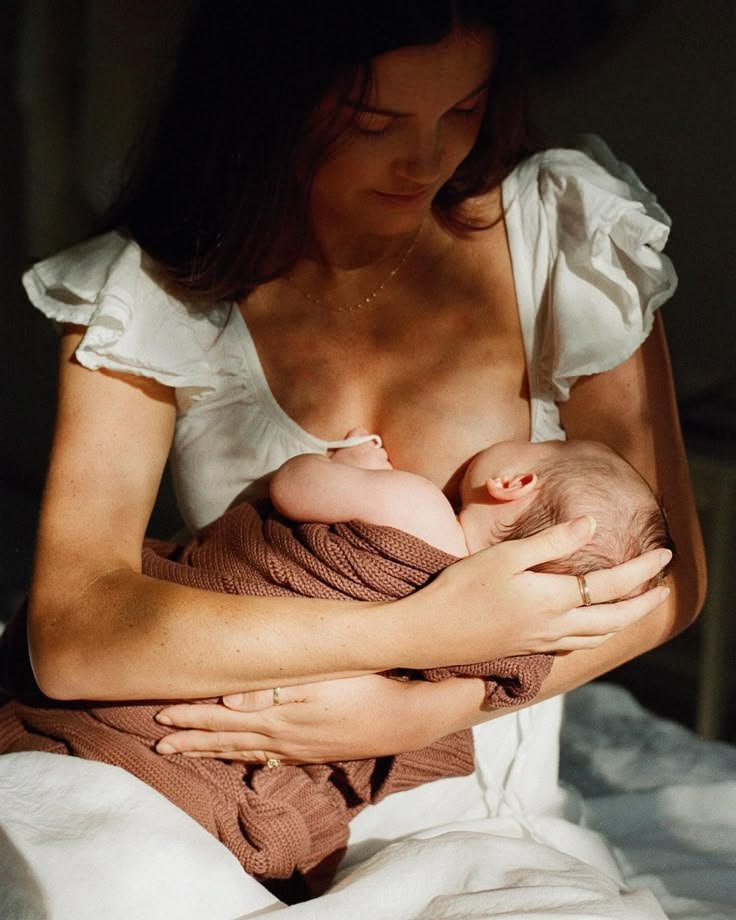
Breastfeeding Through History: What Ancient Wisdom, Scripture, and Modern Science All Agree On
One of the things I love most about studying physiology is realizing that many of the things modern science is only now beginning to explain have quietly existed throughout human history all along. Breastfeeding is one of those things. Long before breast pumps, bottles, formula, and sterilizers existed, mothers all over the world nourished their babies with their own bodies. For nearly all of human history, breastfeeding wasn't considered one parenting choice among many. It was simply the normal beginning of life.
Today, breastfeeding is often discussed as a lifestyle choice or parenting philosophy. Historically, however, it wasn't viewed that way at all. It was simply how human babies were fed. The more we study anthropology, developmental science, physiology, and even Scripture, the more we find ourselves arriving at the same conclusion: breastfeeding isn't a modern movement. It's one of humanity's oldest and most remarkable traditions.
Breastfeeding Across Human History
When anthropologists began studying traditional societies around the world, they found something remarkably consistent. From the Hadza of Tanzania to the San peoples of southern Africa, from Indigenous communities throughout North and South America to cultures across Asia and Europe, breastfeeding was the biological norm. Despite enormous differences in geography, language, and cultural customs, mothers nourished their babies in strikingly similar ways because human milk was simply the food human babies were designed to receive (Konner, 2005; Hrdy, 2009; Dettwyler, 1995).
These observations reveal something else that often surprises modern parents. In many traditional societies, babies remained physically close to their mothers throughout the day, nursing not only in response to hunger but also for thirst, illness, comfort, and emotional connection. Feeding was not viewed as a task separate from caregiving. It was woven into daily life and served as one of the primary ways mothers regulated and cared for their infants. Modern attachment research and developmental neuroscience increasingly support these observations, demonstrating that responsive caregiving during infancy plays an important role in emotional regulation, healthy brain development, and secure attachment.
Breastfeeding Into Toddlerhood Was Once Ordinary
Another finding that consistently emerges from anthropology is that breastfeeding beyond infancy was historically very common. While many people today think of nursing a toddler as unusual, anthropologists have documented that natural weaning often occurred somewhere between two and four years of age, with some cultures nursing even longer depending on environmental conditions, food availability, and cultural practices (Dettwyler, 1995). In other words, what many people now call "extended breastfeeding" would have been considered entirely ordinary throughout much of human history.
This historical perspective also helps explain why organizations like the World Health Organization recommend breastfeeding for two years or beyond. These recommendations are not attempting to revive an outdated tradition or promote a particular parenting philosophy. Rather, they reflect both the anthropological record and the growing body of research demonstrating that breast milk continues to provide nutritional, immunological, and developmental benefits well into the toddler years. Modern public health recommendations and ancient human experience are, in this case, pointing in the same direction.
Scripture Quietly Affirms What Was Already Ordinary
One of the things I appreciate most about Scripture is that it rarely attempts to argue for breastfeeding. Instead, it simply assumes it. That may seem like a small observation, but I think it is actually quite meaningful. Throughout the Bible, breastfeeding appears not as a parenting philosophy or controversial decision, but as one of the ordinary rhythms of motherhood. It was simply part of life.
When Hannah remained home to nurse Samuel before bringing him to the temple, the text offers no explanation because none was needed (1 Samuel 1:22–24). The psalmist reflects on God's care by saying, "You made me trust You at my mother's breasts," using breastfeeding as a picture of complete safety and dependence (Psalm 22:9). Likewise, Isaiah compares God's compassion for His people to that of a nursing mother, asking, "Can a woman forget her nursing child?" (Isaiah 49:15). These passages are not primarily teaching about breastfeeding itself, but they reveal something beautiful nonetheless. Scripture assumes that a mother's breast is one of the earliest places a baby experiences nourishment, comfort, security, and love.
I find that remarkable because it mirrors what developmental psychology and attachment research continue to uncover today. Long before neuroscience could describe co-regulation or infant attachment, Scripture was already using the nursing relationship as one of its most powerful images of trust, provision, and faithful love.
Modern Science Keeps Discovering What Mothers Have Always Known
Perhaps the most fascinating part of this story is that the deeper scientists study breast milk, the more extraordinary it becomes. For much of modern history, breast milk was viewed primarily as nutrition. Researchers understood that it contained fats, proteins, carbohydrates, vitamins, and minerals, but they assumed its primary purpose was simply to provide calories for a growing baby. Over the past few decades, however, that understanding has changed dramatically.
Today, breast milk is recognized as one of the most biologically complex substances ever studied. It contains living immune cells, antibodies, hormones, enzymes, beneficial bacteria, stem cells, and hundreds of unique human milk oligosaccharides that babies themselves cannot digest (Ballard & Morrow, 2013; Hassiotou & Geddes, 2015). Rather than feeding the infant directly, these specialized sugars nourish beneficial bacteria within the baby's developing microbiome, helping shape immune function, protect against infection, and support healthy intestinal development. Scientists continue discovering new components of human milk every year, reminding us how much there still is to learn.
One of the most remarkable characteristics of breast milk is that it is not static. Colostrum, the first milk produced after birth, is highly concentrated with immune factors designed to support the newborn during those earliest days of life. As babies grow, the composition of breast milk changes to meet their changing developmental needs. Research has even demonstrated that breast milk can vary throughout a single feeding and across different stages of lactation, reflecting an extraordinary level of biological adaptability that scientists are still working to fully understand.
More Than Nutrition
Breastfeeding has never been solely about transferring nutrients from mother to baby. While nutrition is certainly essential, researchers increasingly recognize that breastfeeding supports many aspects of infant development simultaneously. Nursing helps regulate a baby's temperature, stabilizes blood sugar, supports immune maturation, nourishes the developing microbiome, encourages healthy jaw and oral development, and provides repeated opportunities for co-regulation between mother and infant (Victora et al., 2016).
This is one of the reasons babies often seek the breast for reasons that extend beyond hunger alone. Nursing frequently provides comfort during illness, reassurance after a frightening experience, regulation during times of overstimulation, and closeness during periods of transition. What can sometimes appear to adults as "comfort nursing" is, in many ways, part of the remarkable design of infancy. Attachment researchers, developmental psychologists, and neuroscientists increasingly recognize that these repeated moments of responsive caregiving help shape a child's developing nervous system while strengthening the secure attachment relationship that supports healthy emotional development later in life (Bowlby, 1969; Porges, 2011).
Ancient Wisdom and Modern Research Point in the Same Direction
One of the themes you'll notice throughout this website is that I love when ancient wisdom and modern science meet. Again and again, we find ourselves rediscovering the remarkable intelligence built into the human body. Breastfeeding is one of those beautiful examples. Anthropology reminds us that mothers have nourished babies this way for thousands of years. Scripture quietly assumes it as one of the ordinary rhythms of family life. Modern physiology continues uncovering new reasons why human milk is uniquely suited for human babies.
None of this is meant to place guilt on mothers whose breastfeeding journeys have looked different than they hoped. Every family has its own story, and many women navigate challenges that are entirely outside of their control. Rather, I hope this growing body of research encourages us to appreciate just how extraordinary God's design truly is. The more we study the human body with curiosity and humility, the more we discover that many of the patterns woven throughout history were never arbitrary. They were beautifully intentional.
Work With Me
If you're preparing for pregnancy, currently expecting, or looking for evidence-based support during the postpartum season, I'd be honored to walk alongside you. My practice is centered on helping women build healthy families through personalized naturopathic care rooted in both science and God's design.
I currently offer Preconception & Pregnancy Preparation, the Pregnancy Support Container, Personalized Birth Planning & Support, the Miscarriage Healing Package, the Natural Motherhood Collective, and the Family Doctor Membership. You can learn more about each offering on the Work With Me page of my website.
If you'd like to connect, simply text (619) 630-8730 with your name, your due date (or desired conception date), and the offering you're interested in. I'd love to schedule a complimentary call to learn more about your goals and see if we're a good fit.
References
Ballard O, Morrow AL. Human milk composition: Nutrients and bioactive factors. Pediatric Clinics of North America. 2013;60(1):49–74.
Bowlby J. Attachment and Loss. Volume 1: Attachment. New York: Basic Books; 1969.
Dettwyler KA. A time to wean: The hominid blueprint for the natural age of weaning in modern human populations. In: Stuart-Macadam P, Dettwyler KA, editors. Breastfeeding: Biocultural Perspectives. Aldine de Gruyter; 1995.
Hassiotou F, Geddes DT. Immune cell-mediated protection of the mammary gland and the infant during breastfeeding. Advances in Nutrition. 2015;6(3):267–275.
Hrdy SB. Mothers and Others: The Evolutionary Origins of Mutual Understanding. Harvard University Press; 2009.
Konner M. Hunter-gatherer infancy and childhood: The !Kung and others. In: Hewlett BS, Lamb ME, editors. Hunter-Gatherer Childhoods. Aldine Transaction; 2005.
Porges SW. The Polyvagal Theory: Neurophysiological Foundations of Emotions, Attachment, Communication, and Self-Regulation. New York: W.W. Norton & Company; 2011.
Victora CG, Bahl R, Barros AJD, et al. Breastfeeding in the 21st century: Epidemiology, mechanisms, and lifelong effect. The Lancet. 2016;387(10017):475–490.
World Health Organization. Infant and Young Child Feeding. Geneva: World Health Organization.
The Holy Bible. 1 Samuel 1:22–24.
The Holy Bible. Psalm 22:9.
The Holy Bible. Isaiah 49:15.

Why Eggs Are One of the Best Foods to Eat During Pregnancy
When most people think about pregnancy nutrition, they think about prenatal vitamins.
Few think about eggs.
Yet one of the most important nutrients for your baby's developing brain is found in one of the simplest foods sitting in the refrigerator.
Choline.
Long before your baby is born, millions of neurons are forming, migrating, and connecting with one another to build the remarkable organ that will one day think, learn, remember, and experience the world. This extraordinary process begins just weeks after conception and continues throughout pregnancy, making adequate nutrition especially important during these foundational months.
Among all the nutrients involved in fetal brain development, choline has quietly become one of the most researched, yet one of the most overlooked.
A Remarkable Food for a Remarkable Time
Pregnancy is one of the most nutritionally demanding seasons of a woman's life.
Your body isn't simply growing a baby. It is developing an entirely new organ in the placenta, expanding blood volume by nearly fifty percent, remodeling connective tissue, adapting the immune system, and supporting the rapid growth of every organ within your developing baby.
Every one of these processes depends upon adequate nutrition.
While no single food can provide everything a growing baby needs, eggs come remarkably close to being one of nature's most complete pregnancy foods.
In addition to being one of the richest dietary sources of choline, eggs also provide high-quality protein, vitamin B12, selenium, iodine, riboflavin, lutein, zeaxanthin, and other nutrients that support both maternal health and fetal development.
Nature rarely packages nutrients in isolation. Instead, foods provide vitamins, minerals, healthy fats, amino acids, and countless bioactive compounds that work together in ways researchers are still discovering.
Why Choline Matters
Choline is considered an essential nutrient, meaning the body cannot produce enough on its own to meet its needs.
During pregnancy, those needs increase substantially because choline plays an important role in cell membrane formation, neurotransmitter production, gene expression, and healthy brain and nervous system development.
Despite its importance, research suggests that nearly 90% of pregnant women do not consume the recommended amount of choline each day.
Just two large eggs provide roughly 300 milligrams of choline, making them one of the easiest and most affordable ways to increase choline intake through whole foods.
For comparison, the current Adequate Intake for pregnancy is 450 milligrams per day.
What the Research Shows
Over the past two decades, researchers have become increasingly interested in how maternal choline intake influences fetal brain development.
One randomized controlled trial published in The FASEB Journal found that infants born to mothers who consumed higher amounts of choline during pregnancy demonstrated faster information processing speed during infancy, an early measure associated with healthy cognitive development (Caudill et al., 2018).
Researchers later followed these same children and found that those whose mothers consumed more choline during pregnancy demonstrated improved sustained attention at seven years of age (Bahnfleth et al., 2022).
These findings are exciting because they suggest that nutrition during pregnancy may influence neurodevelopment well beyond birth.
At the same time, it's important to recognize that nutrition is only one piece of the puzzle. Genetics, overall dietary patterns, maternal health, environment, and countless other factors all contribute to a child's development. Choline is not a magic nutrient, but it is an essential one.
Several comprehensive review papers have likewise concluded that choline plays a critical role in pregnancy while emphasizing that it remains one of the most underconsumed nutrients among pregnant women (Wallace et al., 2018; Zeisel & da Costa, 2009).
Food First
As a naturopathic doctor, I believe supplements absolutely have their place. There are many situations where targeted supplementation is appropriate and beneficial.
But whenever possible, I encourage women to begin with real food.
Whole foods provide far more than isolated nutrients. They deliver proteins, healthy fats, vitamins, minerals, antioxidants, enzymes, and thousands of naturally occurring compounds that work together in remarkable ways.
Eggs are a beautiful example of that design.
Rather than thinking of them as simply a source of protein, we can appreciate them as one of nature's most nutrient-dense foods for supporting both mother and baby throughout pregnancy.
Final Thoughts
Pregnancy is one of the most extraordinary physiological processes ever created.
Every day your body is building new tissues, expanding circulation, coordinating hormones, and supporting the development of an entirely new human being.
Simple foods often play a much bigger role in that story than we realize.
While no single food determines the outcome of a pregnancy, eggs are one of the most evidence-supported whole foods for helping meet the increased nutritional demands of this remarkable season.
Sometimes the most powerful nourishment isn't found in a supplement bottle.
It's already sitting on your breakfast plate.
Work With Me
If you're looking for personalized, evidence-informed support before or during pregnancy, I'd be honored to walk alongside you.
I offer individualized care through my Preconception & Pregnancy Preparation, Pregnancy Support Container, Personalized Birth Planning & Support, Natural Motherhood Collective, Miscarriage Healing Package, and Family Doctor Membership.
To learn more, visit the Work With Me page on my website.
Or text (619) 630-8730 with your name and the offering you're interested in, and I'll personally reach out to schedule a time for us to connect.
References
Bahnfleth CL, et al. Prenatal choline supplementation improves child sustained attention: A 7-year follow-up of a randomized controlled feeding trial. The FASEB Journal. 2022.
Caudill MA, et al. Maternal choline supplementation during the third trimester of pregnancy improves infant information processing speed: A randomized, double-blind, controlled feeding study. The FASEB Journal. 2018.
Wallace TC, Blusztajn JK, Caudill MA, et al. Choline: The Underconsumed and Underappreciated Essential Nutrient. Nutrients. 2018.
Zeisel SH, da Costa KA. Choline: An Essential Nutrient for Public Health. Nutrition Reviews. 2009.
Do Babies Need Daycare? What Attachment Science Says About the First Three Years
One of the most common pieces of advice new parents hear today is that babies "need daycare for socialization."
It is usually offered with the best intentions. Friends, family members, healthcare providers, and even complete strangers reassure anxious parents that while returning to work may feel difficult, at least their baby will benefit from being around other children. Over time, this message has become so deeply woven into our culture that many people simply accept it as developmental fact.
But is it actually true?
When we turn to decades of developmental psychology, attachment research, neuroscience, and infant physiology, a very different picture begins to emerge. Babies do not developmentally need daycare for socialization. In fact, the research suggests almost the opposite. During the first three years of life, a baby's greatest developmental need is not peer interaction but secure attachment with one or a few consistent caregivers. Long before babies are learning how to make friends, they are learning something far more foundational: whether the world is safe, whether their needs will be met, and whether the people they love will reliably respond when they cry.
This distinction matters because the first three years of life are not simply another stage of childhood. They represent one of the most extraordinary periods of brain development humans will ever experience. During these early years, babies are not only learning language, movement, and communication. They are developing their ability to regulate stress, form healthy relationships, trust other people, and understand whether the world is a safe place. These capacities become the foundation upon which future emotional health, resilience, learning, and relationships are built.
Surprisingly, this has been the focus of developmental research for decades. Rather than beginning with the question, Is daycare good or bad?, developmental psychologists first asked something much more fundamental: What are human babies biologically designed to need during the earliest years of life?
Before we go any further, I think it's important to say this: understanding what babies are biologically designed to need is not the same as judging families for the decisions they must make. Every family has unique circumstances, and many parents are navigating choices they never wished they had to make. My hope is not to create guilt, but to thoughtfully explore what decades of developmental science can teach us about infant development and what babies were designed to need during the earliest years of life.
Again and again, the answer has remained remarkably consistent.
Human babies were designed first and foremost for secure attachment. Rather than requiring early classrooms, peer groups, or structured socialization, infants are biologically designed to develop within stable, responsive relationships with one or a few devoted caregivers. This is not simply one developmental milestone among many. Attachment is the foundation upon which nearly every other aspect of development is built. A baby's earliest relationships help organize the developing brain, regulate the nervous system, influence stress physiology, shape emotional resilience, and lay the groundwork for future relationships throughout life (Bowlby, 1969; Ainsworth et al., 1978; Schore, 2001).
As both a naturopathic doctor and someone who loves studying embryology, physiology, and developmental psychology, I find this incredibly beautiful. The deeper we study the human body, the more we discover that a baby's needs are not arbitrary. They are purposeful.
Just as a newborn instinctively searches for the breast, quiets at the sound of their mother's voice, recognizes familiar smells, and calms against a parent's heartbeat, they also enter the world expecting something much deeper than simply having their physical needs met. They expect relationship. They expect connection. They expect to belong. That expectation is not merely sentimental; it is biology. Human babies are born expecting close, responsive relationships because those relationships are woven into their physiology from the very beginning.
Babies Were Designed for Attachment
One of the greatest contributions to our understanding of early childhood came from British psychiatrist John Bowlby, whose work fundamentally changed how the scientific community understood infancy. Prior to Bowlby's research, many believed babies primarily needed caregivers for food and physical survival. Bowlby proposed something profoundly different. Through decades of observation and research, he demonstrated that infants possess an innate biological drive to remain physically and emotionally close to one or a few consistent caregivers because these relationships increase survival and provide the foundation for healthy psychological development (Bowlby, 1969).
Mary Ainsworth later expanded upon this work through her landmark Strange Situation experiments. Her research demonstrated that babies who experienced consistently responsive caregiving were more likely to develop secure attachment, while inconsistent or disrupted caregiving patterns often led to less secure attachment styles (Ainsworth et al., 1978). More than four decades later, attachment theory remains one of the most extensively studied and well-supported areas of developmental psychology.
Today, attachment is no longer viewed as simply an emotional preference or a parenting philosophy. It is understood as a biological necessity. During the first years of life, babies quite literally borrow the nervous system of their caregivers. Long before they are capable of regulating their own emotions, they rely upon the calm presence, touch, voice, facial expressions, and responsiveness of trusted adults to help regulate stress. Allan Schore, whose work has been foundational in developmental neuroscience, describes these early caregiver interactions as essential for organizing the infant's developing right brain, which plays a central role in emotional regulation, attachment, and resilience throughout life (Schore, 2001).
This means something extraordinary. Every time a parent comforts a crying baby, gently rocks them to sleep, smiles back at them, or responds to their distress with warmth and consistency, they are doing far more than meeting an immediate need. They are helping shape the architecture of their child's developing brain. What often feels like ordinary parenting is, in reality, one of the most profound forms of neurological development taking place during infancy.
The first three years of life represent one of the most rapid periods of neurological growth humans will ever experience. At birth, a baby's brain is only about twenty-five percent of its adult size. Over the next several years, billions of neural connections are formed through repeated experiences with the people and environment around them. Every interaction is, quite literally, helping build the architecture of the developing brain.
Harvard University's Center on the Developing Child describes these early interactions between babies and caregivers as "serve and return" relationships. When an infant cries and a caregiver responds, when a baby coos and an adult smiles back, when tiny hands reach out and are lovingly received, these seemingly ordinary moments strengthen neural pathways involved in language, executive function, emotional regulation, learning, and social development (Shonkoff & Phillips, 2000; Center on the Developing Child, Harvard University). Brain development is not driven primarily by educational activities or enrichment programs during infancy. It is built through thousands upon thousands of responsive interactions with trusted caregivers.
This is one of the reasons the phrase "quality time" can be somewhat misleading when applied to babies. While older children may benefit from intentionally planned activities, infants experience development through relationship itself. Diaper changes, feeding, rocking, eye contact, playful conversations, being carried around the house, and responding to their cries are not interruptions to healthy development. They are healthy development. The ordinary rhythms of daily life are quietly shaping the neural pathways that will influence emotional health, learning, resilience, and relationships for years to come.
Notice what is striking about this research. None of these foundational developmental experiences require a room full of other babies. They require one attentive adult who responds with consistency, warmth, and presence over time. Again and again, developmental science points us back to the same conclusion: the architecture of the infant brain is built primarily through secure relationships, not peer interaction.
The Myth of "Daycare for Socialization"
Perhaps no modern parenting phrase has been repeated more often than, "Babies need daycare for socialization." It has become so commonplace that many parents never stop to ask where this idea originated or whether developmental science actually supports it.
Interestingly, developmental psychologists describe infancy very differently.
When researchers outline the central developmental tasks of the first three years of life, they consistently point toward secure attachment, emotional regulation, language acquisition, sensory integration, motor development, and responsive caregiving. Peer relationships simply do not emerge as the primary developmental task during infancy. Rather, they become increasingly important later in childhood, after secure attachment has already been established.
One of the clearest illustrations of this comes from developmental researcher Mildred Parten, whose observations of young children transformed our understanding of social play. Parten described predictable stages through which children's play develops over time. Babies and young toddlers spend much of their time observing others or engaging independently. As they approach the toddler years, they commonly participate in what she called parallel play, where children play alongside one another without consistently interacting or working together toward a shared activity (Parten, 1932).
This is exactly what healthy development looks like.
Young children are not failing to socialize. Their brains are simply focused on something more foundational. During infancy, the primary work of the developing brain is not learning how to navigate friendships with peers. It is learning whether trusted adults are safe, responsive, emotionally available, and dependable.
For babies and young toddlers, the most important social relationships are not found with peers. They are found with parents, grandparents, siblings, and the small circle of adults who consistently know, love, and respond to them. These relationships become the template through which children eventually learn to build healthy friendships later in life.
In many ways, the phrase "babies need daycare for socialization" says far more about modern culture than it does about infant development. As psychotherapist Erica Komisar has observed, conversations surrounding infancy increasingly begin with the practical realities of adult work schedules rather than the biological needs of babies themselves (Komisar, 2017). Over time, our culture has gradually reframed early separation as something that benefits children rather than simply acknowledging it as a necessity for many families. Socialization has become one of the most common explanations offered to reassure parents. Yet when we return to the attachment literature itself, peer socialization simply does not emerge as the primary developmental need of infancy.
Instead, one message appears again and again across decades of developmental psychology, neuroscience, and attachment research: babies do not primarily need more peers during the first three years of life. They need more secure attachment.
One of the largest childcare studies ever conducted reinforces this point. The NICHD Study of Early Child Care followed more than 1,300 children over many years to better understand how early childcare experiences influenced development. Researchers found that children's outcomes were shaped by many factors, including the quality of childcare, the quality of parenting at home, family relationships, and individual temperament. Warm, responsive parenting consistently remained one of the strongest predictors of healthy development. At the same time, researchers also found associations between extensive hours spent in non-maternal childcare beginning early in life and modest increases in certain externalizing behaviors, such as aggression and disobedience (NICHD Early Child Care Research Network, 2002).
Like nearly all research involving human development, these findings deserve nuance. They do not suggest that every child in daycare experiences harm or that every family should make identical decisions. Human development is wonderfully complex and influenced by countless interacting variables. Yet one conclusion has remained remarkably consistent across decades of attachment research: during the earliest years of life, the quality and consistency of a baby's primary relationships matter profoundly.
Why the First Three Years Matter
One of the reasons the first three years of life carry such extraordinary importance is because babies are born completely dependent upon the adults around them to regulate nearly every aspect of their physiology. A newborn cannot calm an overwhelmed nervous system, regulate intense emotions, or make sense of stressful experiences independently. Instead, babies rely upon what developmental psychologists often refer to as co-regulation. Every time a loving caregiver picks up a crying baby, rocks them to sleep, nurses them, smiles at them, or responds to their distress with warmth and consistency, that adult is helping regulate the infant's developing nervous system. Over thousands upon thousands of these seemingly ordinary interactions, babies gradually internalize that sense of safety until they are eventually able to regulate themselves. Secure attachment is not simply an emotional bond. It is one of the primary ways emotional regulation is learned (Schore, 2001; Porges, 2011).
Advances in developmental neuroscience have only strengthened this understanding. Allan Schore's work demonstrates that the infant's rapidly developing right brain is profoundly shaped by emotionally attuned interactions with primary caregivers (Schore, 2001). Bruce Perry has similarly emphasized that the developing brain is built through repeated relational experiences rather than isolated educational activities or early academic instruction (Perry & Szalavitz, 2006). In other words, the baby's developing brain is asking the same question over and over again: Am I safe? Long before children learn letters, numbers, colors, or social skills, their nervous systems are learning whether distress is met with comfort, whether trusted adults respond consistently, and whether the world is a predictable place.
This is one of the reasons attachment researchers have expressed concern about prolonged separation during infancy. Human babies possess an immature stress response system that depends heavily upon the buffering effects of familiar caregivers. Research examining cortisol, one of the body's primary stress hormones, has found that some infants and toddlers in group childcare settings experience elevated cortisol levels throughout the day, even when they appear outwardly content (Gunnar & Donzella, 2002; Vermeer & van IJzendoorn, 2006). These findings do not mean that every child experiences harm or that every daycare environment produces the same physiological response. Human development is wonderfully complex and influenced by countless variables, including caregiver sensitivity, childcare quality, family relationships, temperament, genetics, and the amount of time spent in care. Nevertheless, these studies remind us that babies experience separation not only emotionally but biologically. Their nervous systems recognize when the people to whom they are most deeply attached are absent.
This also helps explain why conversations surrounding daycare are often framed too simply. The discussion frequently centers on whether a childcare center is "good" or "bad," as though the quality of the facility alone determines a child's experience. While high-quality childcare is certainly preferable to poor-quality childcare, attachment theory reminds us that the central question is not merely whether a caregiver is kind or competent. The deeper question is whether that caregiver can realistically become the stable attachment figure an infant's developing nervous system is expecting.
Even the most compassionate daycare provider faces limitations that have nothing to do with their character or dedication. One caregiver may be responsible for several infants with different schedules, different temperaments, different feeding needs, and different cries. Staff members become sick, schedules change, vacations occur, classrooms shift, and caregivers inevitably come and go. Attachment, however, is built through thousands of repeated interactions with a small number of familiar adults who know the child intimately, recognize subtle cues, anticipate needs, and provide consistent comfort over months and years. Relationships, not institutions, are what organize infant development.
Psychotherapist Erica Komisar has spent much of her career helping modern parents understand this distinction. One of her central arguments is that our culture has gradually shifted from asking what babies biologically need toward asking how babies can best adapt to adult lifestyles. Those are fundamentally different questions. Throughout history, the needs of infants largely shaped family life. Today, family life is often expected to accommodate workplace demands first, with infant development adapting as best it can. Komisar argues that, in this cultural shift, we have increasingly reframed early separation as beneficial, often reassuring parents that daycare provides essential opportunities for socialization or education, despite decades of attachment research suggesting that the greatest developmental need during infancy is secure attachment with primary caregivers (Komisar, 2017).
Recognizing this does not require us to judge families who rely upon daycare. Many parents return to work because they genuinely have no alternative. Others love their careers, support their families financially, or make decisions that are best for their unique circumstances. Every family's story is different, and there should be tremendous compassion for the realities many parents face. Understanding what babies are biologically designed to need is not the same as condemning parents who must navigate difficult choices. We can extend grace to families while also remaining honest about what the developmental literature has consistently shown.
One of the aspects of attachment research I find most fascinating is how closely it aligns with what we observe throughout human history. For the overwhelming majority of our existence as a species, babies remained in close proximity to parents, grandparents, siblings, and extended family throughout the day. They were carried while meals were prepared, comforted when they cried, breastfed on demand, observed conversations, watched daily work, and gradually became integrated into family life through constant presence rather than prolonged separation. Institutional childcare, where large groups of unrelated infants spend much of their waking day together, represents an extraordinarily recent development in human history.
From an evolutionary perspective, this matters. Human biology changes slowly, often over thousands of generations. Society, on the other hand, can transform dramatically within a century. While our workplaces, economies, and family structures have changed rapidly, infant biology has not. Babies today are born with the same nervous systems, the same attachment needs, and the same expectation for close, responsive relationships that they have possessed for countless generations. The environment surrounding infancy has changed far more quickly than the biology of infancy itself.
Returning to God's Design
One of the recurring themes throughout developmental psychology is that healthy independence is never the starting point. It is the destination. Developmental psychologist Gordon Neufeld has written extensively that children become independent by first becoming deeply dependent upon the people who care for them (Neufeld & Maté, 2004). This idea often feels counterintuitive within a culture that celebrates early independence, yet it is echoed throughout decades of attachment research. Children who experience secure attachment during the earliest years often grow into the most emotionally resilient, socially competent, and genuinely independent adults. Security comes before exploration. Connection comes before confidence. Dependence is not the opposite of independence; it is the path that leads there.
Perhaps one of the greatest misconceptions of modern parenting is that babies need to spend more time with other babies in order to become social, resilient, or independent. Developmental science suggests something very different. Babies become socially healthy because they first experience secure attachment. They become emotionally resilient because they first experience consistent comfort. They become independent because they first know what it feels like to be deeply loved by someone who is reliably there.
As I have studied developmental psychology alongside embryology, physiology, and vitalistic medicine, I have been struck by how often they arrive at the same conclusion. The deeper we study the human body, the more we discover that babies were designed with extraordinary intentionality. Their desire to be held is not manipulation. Their distress during separation is not weakness. Their need for one or two deeply familiar caregivers is not a dependency that needs to be overcome. Rather, these are normal expressions of healthy physiology and healthy development. They are exactly what we would expect from a species whose survival has always depended upon close, consistent relationships with devoted caregivers.
Unfortunately, much of modern culture asks a very different question than developmental science does. Rather than asking, What does a baby need to flourish?, we often begin by asking, How can babies adapt to the way our society currently functions? Those are fundamentally different questions, and they naturally lead us toward very different conclusions.
Over the past century, our communities have become increasingly fragmented. Multigenerational households have become less common, extended families often live hundreds or even thousands of miles apart, and many mothers return to work only weeks or months after giving birth. Financial pressures continue to rise, and for many families, two incomes have become a necessity rather than a choice. None of this happened because parents suddenly stopped loving their children. In my experience, most mothers desperately want to spend more time with their babies, and many fathers wish they had the flexibility to do the same. The problem is not that parents care too little. The problem is that our culture often asks families to function in ways that are fundamentally different from what both babies and parents were designed for.
Rather than changing our systems to better support families, we have often changed the narrative surrounding infant development. Parents are reassured that babies need daycare for socialization, that early independence is something to strive for, and that becoming accustomed to separation is a developmental advantage. Yet when we return to the attachment literature, developmental neuroscience, and infant psychology, a very different picture emerges. Again and again, researchers point us back to the same conclusion: babies flourish through stable, responsive, emotionally available relationships with the people who know and love them most. Secure attachment is not simply one factor among many. It is the foundation upon which emotional regulation, resilience, confidence, healthy relationships, and ultimately independence are built.
Recognizing this does not mean every family will be able to keep their baby home during the first three years of life. Life is often far more complicated than ideals. Some parents are raising children on their own. Some families genuinely cannot survive financially without two incomes. Others face circumstances entirely outside of their control. There should be tremendous compassion for those realities. But compassion should never require us to redefine what is biologically optimal. Acknowledging what babies were designed to need is not the same as condemning parents who must navigate difficult circumstances. If anything, this understanding should motivate us to build communities, workplaces, churches, healthcare systems, and policies that make it easier for families to remain together during the earliest years rather than continually expecting babies to adapt to adult demands.
Thankfully, children do not need perfect parents. They do not need every interaction to be flawless or every decision to unfold exactly as planned. They need love. They need consistency. They need repair when mistakes are made. Most of all, they need to know there is someone in this world who belongs to them and to whom they belong. That secure relationship becomes the foundation from which they eventually gain the confidence to explore the world on their own.
One of the greatest ironies of childhood is that the children who are allowed to remain deeply connected during the earliest years often become the very adults who are most capable of confidently stepping out into the world. Independence is not created by encouraging earlier separation. It grows out of secure attachment.
One of the things I love most about studying both developmental psychology and vitalistic medicine is realizing that God's design is often confirmed the deeper we look into physiology. Human babies were not designed to begin life in independence. They were designed to begin life in relationship. Every cuddle, every feeding, every moment of eye contact, every comforting embrace, every ordinary afternoon spent together is quietly shaping the architecture of a developing brain in ways we may never fully appreciate.
Perhaps babies do not need more classrooms, more structured activities, or more opportunities to socialize. Perhaps what they have always needed has never changed. They need to be known, delighted in, comforted, and deeply loved by the people who belong to them.
The question, then, is not whether babies can adapt to spending their earliest years apart from the people they love. Human beings are remarkably adaptable. The better question is this: if we were designing the ideal environment for a baby's developing brain from the very beginning, knowing everything we now know about attachment, neuroscience, and child development, would we choose institutional care, or would we choose the consistent love, presence, and attachment of the people who know them best?
The deeper we study childhood, the more it seems that God's design has been quietly pointing us toward the answer all along.
Recommended Reading
These books provide excellent introductions to attachment theory, early childhood development, developmental neuroscience, and the importance of responsive caregiving. While many are written for parents rather than researchers, each has significantly influenced the conversation surrounding infant development.
Erica Komisar. Being There: Why Prioritizing Motherhood in the First Three Years Matters.
Gordon Neufeld & Gabor Maté. Hold On to Your Kids: Why Parents Need to Matter More Than Peers.
Daniel Siegel & Tina Payne Bryson. The Power of Showing Up.
Bruce Perry & Oprah Winfrey. What Happened to You?
Bruce Perry & Maia Szalavitz. The Boy Who Was Raised as a Dog.
Jean Liedloff. The Continuum Concept.
Sarah Hrdy. Mothers and Others: The Evolutionary Origins of Mutual Understanding.
Darcia Narvaez. Neurobiology and the Development of Human Morality.
References
Ainsworth MDS, Blehar MC, Waters E, Wall S. Patterns of Attachment: A Psychological Study of the Strange Situation. Hillsdale, NJ: Lawrence Erlbaum Associates; 1978.
Belsky J. Quantity of nonmaternal care and boys' problem behavior/adjustment at ages 3 and 5: Exploring the mediating role of parenting. Psychiatry. 2002;65(1):62-88.
Bowlby J. Attachment and Loss. Volume 1: Attachment. 2nd ed. New York: Basic Books; 1982. (Original work published 1969.)
Center on the Developing Child at Harvard University. Serve and Return Interaction Shapes Brain Circuitry. Harvard University.
Center on the Developing Child at Harvard University. InBrief: The Science of Early Childhood Development. Harvard University.
Center on the Developing Child at Harvard University. Excessive Stress Disrupts the Architecture of the Developing Brain. Harvard University.
Gunnar MR, Donzella B. Social regulation of the cortisol levels in early human development. Psychoneuroendocrinology. 2002;27(1-2):199-220.
Heckman JJ. Skill formation and the economics of investing in disadvantaged children. Science. 2006;312(5782):1900-1902.
Komisar E. Being There: Why Prioritizing Motherhood in the First Three Years Matters. New York: TarcherPerigee; 2017.
National Scientific Council on the Developing Child. Young Children Develop in an Environment of Relationships. Working Paper No. 1. Harvard University.
National Scientific Council on the Developing Child. The Timing and Quality of Early Experiences Combine to Shape Brain Architecture. Working Paper No. 5.
Neufeld G, Maté G. Hold On to Your Kids: Why Parents Need to Matter More Than Peers. Toronto: Vintage Canada; 2004.
NICHD Early Child Care Research Network. Early child care and children's development prior to school entry: Results from the NICHD Study of Early Child Care. American Educational Research Journal. 2002;39(1):133-164.
Parten MB. Social participation among preschool children. Journal of Abnormal and Social Psychology. 1932;27(3):243-269.
Perry BD, Szalavitz M. The Boy Who Was Raised as a Dog: And Other Stories from a Child Psychiatrist's Notebook. New York: Basic Books; 2006.
Porges SW. The Polyvagal Theory: Neurophysiological Foundations of Emotions, Attachment, Communication, and Self-Regulation. New York: W.W. Norton & Company; 2011.
Schore AN. Effects of a secure attachment relationship on right brain development, affect regulation, and infant mental health. Infant Mental Health Journal. 2001;22(1-2):7-66.
Shonkoff JP, Phillips DA, editors. From Neurons to Neighborhoods: The Science of Early Childhood Development. Washington, DC: National Academies Press; 2000.
Siegel DJ, Hartzell M. Parenting from the Inside Out. New York: TarcherPerigee; 2013.
Sroufe LA. Attachment and development: A prospective, longitudinal study from birth to adulthood. Attachment & Human Development. 2005;7(4):349–367.
Sroufe LA. The Development of the Person: The Minnesota Study of Risk and Adaptation from Birth to Adulthood. New York: Guilford Press; 2005.
Suomi SJ. Attachment in rhesus monkeys. In: Cassidy J, Shaver PR, editors. Handbook of Attachment: Theory, Research, and Clinical Applications. 2nd ed. New York: Guilford Press; 2008.
Tronick EZ. The Neurobehavioral and Social-Emotional Development of Infants and Children. New York: W.W. Norton & Company; 2007.
Tronick EZ, Beeghly M. The stress of infancy: Concepts and controversies. Journal of Child Psychology and Psychiatry. 2011;52(4):419-430.
Vermeer HJ, van IJzendoorn MH. Children's elevated cortisol levels at daycare: A review and meta-analysis. Early Childhood Research Quarterly. 2006;21(3):390-401.
About the Author
Dr. Emily, ND is a board-certified, licensed naturopathic doctor with a clinical focus in preconception, pregnancy, postpartum care, and pediatrics. She is passionate about helping families understand the remarkable design of the human body through evidence-informed, vitalistic medicine, and developmental science.

Could I Be Pregnant? Early Signs Every Woman Should Know
Long before a pregnancy test turns positive, something extraordinary may already be unfolding. Within days of conception, your body begins one of the most remarkable physiological transformations it will ever experience, often before you even realize it.
If you're reading this, perhaps you're in one of the most tender seasons of womanhood. Maybe you've been trying to conceive for months. Maybe this is your very first cycle hoping for a baby. Maybe you've noticed that something feels different. You're unusually tired. Food tastes strange. Your emotions feel closer to the surface. Or perhaps you're simply wondering if this month could finally be the month.
As a Vitalistic Naturopathic Doctor, I love this season. Not because the waiting is easy, but because it reminds us just how extraordinary the beginning of human life truly is. Before a heartbeat can be seen on an ultrasound, your body may already be changing in remarkable ways. Before anyone else knows a baby may be coming, an intricate conversation has already begun between mother and baby.
That thought never ceases to amaze me.
One of my favorite things about studying embryology is realizing that so much of pregnancy happens quietly. Long before a growing belly or the first flutter of movement, your body is already working with incredible precision. Every hormone, every cell, and every signal has a purpose. It is a beautiful reminder that God designed the female body with extraordinary wisdom.
Pregnancy Begins Long Before You Feel Pregnant
One of the biggest misconceptions about pregnancy is that it begins when you miss your period or see a positive pregnancy test. In reality, pregnancy begins much earlier.
Within hours of fertilization, a single cell begins dividing with astonishing precision. Two cells become four. Four become eight. Within just a few days, hundreds of rapidly dividing cells are traveling down the fallopian tube toward the uterus while each one begins taking on a unique role.
Around six to ten days after ovulation, the tiny embryo reaches the uterus and begins implanting into the uterine lining. This process, known as implantation, marks the beginning of an incredible relationship between mother and baby. Your developing baby immediately begins sending biochemical signals that tell your body a new life is growing within you.
Soon after implantation, hCG begins to rise. This remarkable hormone, often called the pregnancy hormone, helps support early pregnancy and is the hormone detected by home pregnancy tests. At the same time, progesterone continues rising, your immune system begins adapting, your blood vessels start changing, and your body quietly prepares to nourish another human being. All of this is happening before most women ever know they're pregnant.
The more I study these earliest days of life, the more I'm amazed by the incredible wisdom built into the female body. Before we ever see two pink lines, the foundation for an entirely new human life is already being carefully laid.
When Can Pregnancy Symptoms Actually Begin?
One of the questions I hear most often is, "How early can pregnancy symptoms start?" The answer is that every woman is different. Most symptoms do not begin immediately after conception because your body doesn't yet know that fertilization has occurred. Instead, symptoms typically begin after implantation, when your developing baby starts producing hCG and your hormones begin shifting to support pregnancy.
For some women, subtle symptoms begin just a few days before their expected period. Others don't notice anything until several weeks into pregnancy. Some women experience many early symptoms while others have almost none. Every one of these experiences can be completely normal because every woman's body responds differently to the remarkable physiological changes taking place during early pregnancy.
Rather than comparing yourself to someone else's experience, remember that your pregnancy journey is uniquely yours.
Early Signs That Could Suggest Pregnancy
While no single symptom can confirm a pregnancy, your body often begins giving subtle clues as hormones shift to support the remarkable work taking place within you. Some of these changes are easy to recognize, while others can be mistaken for the normal symptoms many women experience before their menstrual period.
Here are some of the most common early signs women may notice.
Unusual Fatigue
One of the earliest and most common pregnancy symptoms is an overwhelming sense of tiredness. This isn't simply feeling sleepy after a long day. Many women describe it as feeling completely drained, even after getting a full night's sleep.
Much of this fatigue is caused by rapidly rising progesterone levels. Progesterone helps support early pregnancy and prepare the uterus to nourish your developing baby, but it also has a naturally calming effect on the body. At the same time, your metabolism is already beginning to work harder as it supports the incredible demands of creating new life.
Breast Tenderness or Changes
Many women notice changes in their breasts before they ever miss a period. Breasts may feel fuller, heavier, sore, or unusually sensitive. The nipples may become more tender, and the areolas may begin to darken as pregnancy progresses.
These changes occur because your body is already preparing for the possibility of breastfeeding many months before your baby is born.
Mild Cramping or Implantation Bleeding
Some women experience mild cramping around the time of implantation. Others notice a small amount of light pink or brown spotting that lasts for a short period of time.
This can understandably feel concerning, especially for women who have experienced miscarriage in the past. However, light implantation bleeding can occur as the embryo settles into the uterine lining.
While any heavy bleeding or concerning symptoms should always be discussed with your healthcare provider, light spotting does not automatically mean something is wrong.
A Heightened Sense of Smell
One of the more fascinating early pregnancy symptoms is a suddenly heightened sense of smell. Foods, perfumes, cleaning products, or even everyday scents may seem much stronger than they did just days before.
Although researchers are still learning exactly why this occurs, it is thought to be related to hormonal changes during early pregnancy. Some scientists also believe it may serve as a protective mechanism by helping mothers avoid foods or substances that could be harmful during early fetal development.
Food Aversions, Cravings, or a Metallic Taste
Many women notice that foods they normally enjoy suddenly become unappealing. Others develop strong cravings, while some experience a persistent metallic taste in their mouth.
These changes can occur surprisingly early and are thought to be influenced by shifting hormone levels and changes in the way the brain processes taste and smell.
Nausea
Despite being called "morning sickness," nausea can occur at any time of day. While it most commonly begins around five to six weeks of pregnancy, some women notice mild nausea even earlier.
Rising hCG levels appear to play an important role, although the exact cause is likely more complex. Interestingly, women with healthy pregnancies often have higher hCG levels than those with abnormal pregnancies, which may help explain why nausea is frequently associated with normal early pregnancy.
Bloating and Slower Digestion
If your pants suddenly feel tighter than usual, hormones may be the reason.
Progesterone naturally relaxes smooth muscle throughout the body, including the muscles of the digestive tract. As digestion slows, many women notice bloating, increased gas, or a feeling of fullness much earlier than they expected.
Constipation may also begin during these earliest weeks for the same reason.
Frequent Urination
Some women find themselves making more trips to the bathroom before they ever miss their period.
As pregnancy begins, your kidneys receive increased blood flow and start filtering more blood than usual. Combined with changing hormone levels, this can lead to more frequent urination, even very early in pregnancy.
Headaches or Lightheadedness
Hormonal shifts, expanding blood vessels, and changes in blood pressure can contribute to mild headaches or occasional dizziness during early pregnancy.
Staying well hydrated, eating balanced meals, and avoiding long periods without food can often help minimize these symptoms.
Increased Cervical Mucus
Some women notice more vaginal discharge than usual during early pregnancy. Healthy early pregnancy discharge is typically thin, milky white, or clear and is usually odorless.
These changes occur as estrogen rises and blood flow to the reproductive organs increases. This discharge helps protect the reproductive tract and support a healthy pregnancy.
Mood Changes
If you've found yourself crying during a commercial or feeling unusually emotional, you're certainly not alone.
The rapid hormonal changes of early pregnancy can influence neurotransmitters in the brain, making emotions feel more intense than usual. Many women notice they feel more sensitive, more reflective, or more easily overwhelmed during these first weeks.
Vivid Dreams
Many women report having unusually vivid or memorable dreams during early pregnancy. While researchers don't fully understand why this occurs, hormonal changes, emotional processing, and changes in sleep patterns likely all play a role.
It's one of those fascinating symptoms that many women don't expect until they experience it themselves.
Feeling Warmer Than Normal
Some women notice they feel unusually warm or find themselves reaching for lighter clothing. After ovulation, progesterone naturally raises the body's resting temperature, and if pregnancy occurs, those elevated progesterone levels continue. At the same time, your metabolism and circulation begin adapting to support your growing baby, which can also contribute to feeling warmer than usual.
While this usually isn't dramatic, some women simply notice they run warmer than they normally do.
Increased Thirst
As your blood volume begins expanding remarkably early in pregnancy, your body's fluid needs also begin increasing. Some women notice they're thirstier than usual even before they realize they're pregnant.
Listening to your body's cues and staying well hydrated is one simple way to support these early physiological changes.
A Missed Menstrual Period
Of course, one of the most recognizable signs of pregnancy is a missed period.
For women with regular cycles, this is often the first clear indication that something may be different. However, because many of the changes we've discussed can begin before a missed period, it's entirely possible to experience pregnancy symptoms while still waiting for your expected cycle.
Ultimately, the only way to know for certain is to take a pregnancy test once enough time has passed for hCG levels to become detectable.
Sometimes You Simply Feel Different
One thing I hear from many women is that they simply can't explain it. They don't necessarily have nausea, sore breasts, or any of the classic early pregnancy symptoms. They just know something feels different. Perhaps they're more emotional than usual, more tired than expected, or simply have a quiet sense that something has changed before they ever see a positive pregnancy test.
Other women notice absolutely nothing until weeks later, and that is completely normal too. Neither experience is more "correct" than the other. Every woman's body responds differently, and every pregnancy begins in its own unique way.
One of the beautiful invitations of this season is learning to pay attention to your body without becoming consumed by every sensation. While it's natural to wonder what each new symptom means, many early pregnancy symptoms can also resemble the hormonal changes that occur before a menstrual period.
If you're in the two week wait, be gentle with yourself. Listen to your body, but don't let every symptom steal your peace. Soon enough, you'll have your answer.
The Waiting Can Feel Long
If you've ever found yourself in the two week wait, you know just how long those days can feel. Every sensation suddenly seems significant. A wave of fatigue makes you wonder. A cramp catches your attention. You find yourself searching online, comparing your experience to someone else's, and questioning whether you're imagining symptoms or truly noticing something new. You may alternate between excitement and disappointment several times in the same day.
If you've experienced infertility or pregnancy loss, those emotions can feel even heavier. The waiting isn't simply about wondering whether you're pregnant. It's about carrying hope while trying to protect your heart. If this is you, I want you to know you're not alone.
Waiting is one of the hardest parts of trying to conceive because there is so little we can control. We naturally long for certainty, yet so much of this journey requires patience and trust. I also want to gently encourage you not to spend these days constantly testing your body for signs. While it's good to be aware of what you're experiencing, living in a constant state of anxiety rarely brings peace. Whether this cycle ends with a positive pregnancy test or not, your body deserves kindness, nourishment, and compassion. One cycle does not define your story.
Caring for Yourself Before You Know
One of the greatest pieces of advice I give women who are trying to conceive is to begin caring for yourself as though your body may already be nurturing new life. Even before you know the outcome of this cycle, you can choose habits that support both your own health and the incredible process that may already be unfolding within you. Focus on eating nourishing meals built around quality protein, healthy fats, colorful fruits and vegetables, and mineral-rich foods. Stay well hydrated, prioritize restorative sleep, and move your body in ways that feel supportive rather than exhausting. Continue taking a high quality prenatal vitamin and look for simple ways to reduce unnecessary toxin exposures throughout your home and daily routine.
Your emotional and spiritual health matter too. Whether that means spending time in prayer, reading Scripture, getting outside in God's creation, slowing down with a cup of tea, or simply creating space to rest, these practices help support your overall well-being during a season that can often feel emotionally overwhelming. While none of these habits guarantee pregnancy, they create a beautiful foundation for your health and provide a nourishing environment for your future baby if conception has already occurred. The earliest weeks of pregnancy are some of the most important days of development, yet they're also the days when many women don't even realize they're pregnant. That's one of the many reasons preconception health matters so deeply.
A Vitalistic Perspective
One of the things I love most about vitalistic naturopathic medicine is that it continually reminds us to marvel at normal physiology. Modern medicine often spends so much time studying disease that we sometimes forget to study health. Pregnancy is one of the greatest examples of the body's innate wisdom. Without any conscious effort, your body knows how to coordinate hormones, remodel blood vessels, adapt the immune system, communicate with a developing embryo, build an entirely new organ in the placenta, and support the earliest stages of human development.
The more I study embryology and pregnancy physiology, the more convinced I become that these earliest days reveal extraordinary wisdom and intentional design. Every tiny detail points back to the wisdom of God. What appears ordinary is, in reality, one of the greatest miracles taking place every single day.
Whether This Is Your Month or Not
If you're waiting to take a pregnancy test, I truly hope this month brings joyful news. I hope you get to experience the excitement of seeing those long-awaited two pink lines. But if this isn't your month, I also hope you remember that one pregnancy test does not define your worth, and one cycle does not determine your future. Trying to conceive is often filled with hope, disappointment, anticipation, and uncertainty, sometimes all within the same month. Give yourself grace, continue nourishing your body, continue preparing, and continue praying. Your body was beautifully designed, and your story is still being written.
You Were Never Meant to Walk This Journey Alone
Whether you're just beginning to think about having a baby, actively trying to conceive, navigating the uncertainty of early pregnancy, preparing for birth, or settling into life as a new mother, you don't have to figure it all out alone.
As a board-certified, licensed Vitalistic Naturopathic Doctor, I love walking alongside women through every stage of this journey. My goal is always the same: to help you better understand your body, support its incredible God-given design, and help you feel informed, confident, and deeply supported every step of the way.
I currently offer personalized support through:
• Preconception Preparation
• Pregnancy Support
• Personalized Birth Planning Support
• Miscarriage Healing Support
• The Family Doctor Membership
Whether you're hoping to optimize your health before pregnancy, receive individualized support throughout pregnancy, prepare for a natural and informed birth, heal after pregnancy loss, or have a trusted naturopathic doctor caring for your growing family, I'd be honored to walk alongside you.
If you'd like to work together, simply text my office at 619-630-8730 with your name and the package you're interested in. I'd love to help you navigate this beautiful season with personalized, relationship-based care.
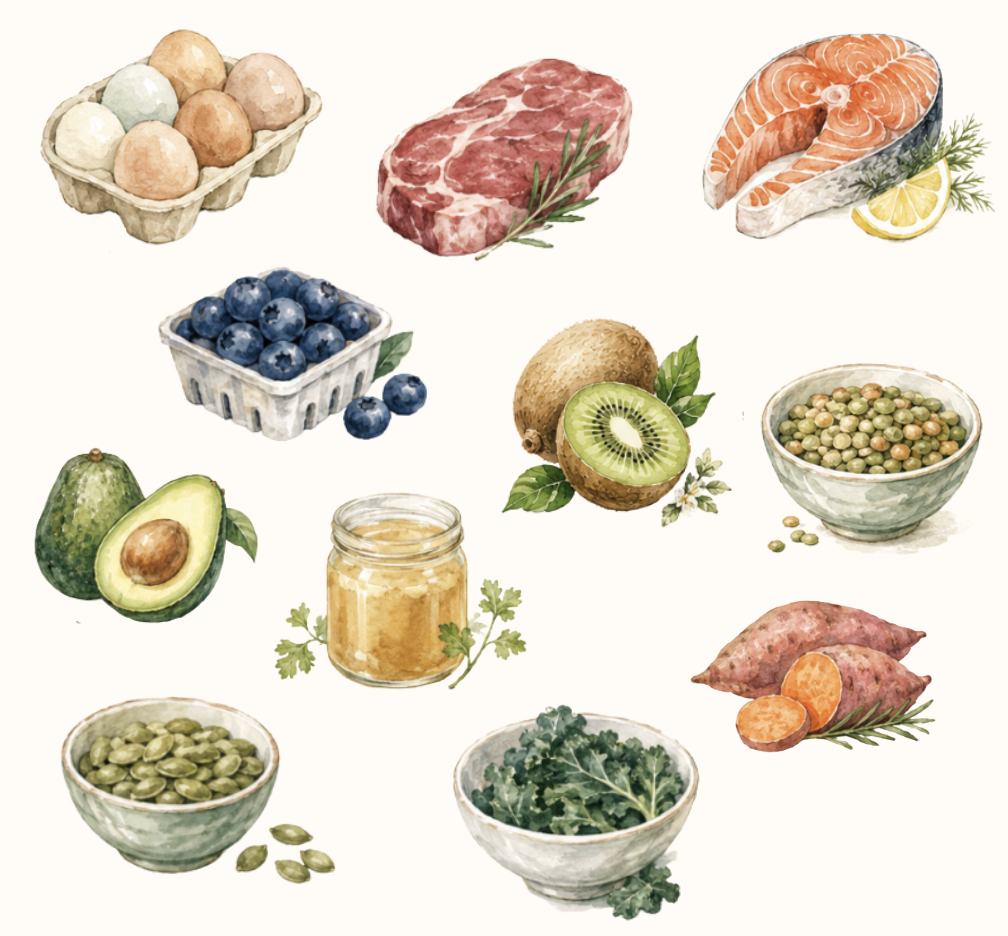
The Pregnancy Nourishment Guide: 11 Nutrient-Dense Foods to Support a Healthy Pregnancy
Every day during pregnancy your body performs miracles that most of us never stop to consider. It grows an entirely new organ. Expands your blood volume by nearly 50 percent. Remodels connective tissue. Coordinates your immune system. Builds a brain containing billions of neurons. Forms tiny fingers, beating hearts, lungs, kidneys, and every other organ your baby will need for life outside the womb.
Every one of these remarkable processes depends on the building blocks your body receives each day.
Pregnancy is one of the most nutritionally demanding seasons of life. Every bite you eat provides your body with vitamins, minerals, healthy fats, protein, and phytonutrients that help support these incredible adaptations. While no single food can guarantee a healthy pregnancy, consistently choosing nutrient-dense whole foods can help nourish both you and your growing baby.
As a Vitalistic Naturopathic Doctor, I encourage mothers to shift their focus away from chasing the perfect diet and instead ask a different question:
How can I nourish the incredible work my body is already doing?
The foods below are some of my favorite pregnancy staples because they provide an impressive combination of nutrients that support both mother and baby throughout this remarkable season.
Pasture Raised Eggs
If I could recommend one food for nearly every pregnant woman it would be eggs. They are one of nature's most complete foods and one of the richest whole food sources of choline, an essential nutrient involved in your baby's brain development, nervous system formation, healthy cell membranes, and gene expression.
Eggs also provide complete protein, vitamin B12, selenium, iodine, and fat soluble vitamins that support both mother and baby. When available, pasture raised eggs may also contain higher amounts of omega 3 fatty acids and carotenoids, making them one of my favorite foods to prioritize during pregnancy.
Bonus Tip: If possible, buy eggs from a trusted local farm. Pasture-raised hens often produce eggs with richer yolks and higher levels of beneficial nutrients.
Grass Fed Beef
By the end of pregnancy your body has increased its blood volume by nearly 50 percent. Supporting that remarkable adaptation requires protein, iron, vitamin B12, zinc, and other nutrients involved in healthy red blood cell production.
Grass fed beef is one of the richest dietary sources of highly absorbable heme iron while also providing complete protein, vitamin B12, zinc, selenium, and many of the amino acids needed to support both maternal tissues and your baby's rapid growth.
Bonus Tip: If grass-fed isn't available or fits your budget, conventional beef is still a nutrient-dense source of highly absorbable iron and protein.
Wild Salmon
Your baby's brain develops at an astonishing pace throughout pregnancy. Wild salmon is one of the richest natural food sources of DHA, an omega 3 fatty acid that becomes incorporated into your baby's developing brain and eyes.
It also provides complete protein, vitamin D, selenium, iodine, and vitamin B12. Because salmon is naturally lower in mercury than many larger fish, it is considered one of the best seafood choices during pregnancy.
Bonus Tip: Aim for wild-caught salmon when possible and enjoy it one to two times per week as part of a low-mercury seafood routine.
Avocados
Pregnancy requires the creation of trillions of new cells, making healthy fats an important part of pregnancy nutrition.
Avocados provide monounsaturated fats along with fiber, potassium, folate, vitamin K, and beneficial phytonutrients. They are an easy way to increase the nutrient density of meals and pair beautifully with eggs, salads, sandwiches, roasted vegetables, and smoothies.
Bonus Tip: Pair avocados with colorful vegetables to help absorb fat-soluble vitamins like A, D, E, and K.
Lentils
Lentils have nourished families around the world for thousands of years and remain one of the most nutrient-dense plant foods you can eat during pregnancy.
They provide folate, fiber, iron, magnesium, and plant protein. Their fiber supports healthy digestion while their slow-digesting carbohydrates help provide steady energy throughout the day. Lentils are delicious in soups, curries, salads, and stews.
Bonus Tip: Enjoy lentils with a vitamin C-rich food like kiwi, citrus, or bell peppers to help enhance iron absorption.
Blueberries
Blueberries are packed with antioxidants that help protect cells from oxidative stress while providing vitamin C, fiber, manganese, and a wide variety of beneficial phytonutrients.
They're one of the easiest foods to enjoy during pregnancy. Add them to yogurt, oatmeal, smoothies, or simply enjoy a handful as a nourishing snack.
Bonus Tip: Frozen blueberries are just as nutritious as fresh and are often more affordable.
Pumpkin Seeds
Pumpkin seeds may be small but they provide an impressive amount of magnesium and zinc.
Magnesium supports hundreds of biochemical reactions throughout the body while zinc contributes to healthy immune function, cell growth, and fetal development. Sprinkle them over salads, oatmeal, yogurt, or homemade trail mix for an easy nutritional boost.
Bonus Tip: Sprinkle pumpkin seeds on yogurt, oatmeal, salads, or soups for an easy mineral boost.
Bone Broth
Protein provides the amino acids needed to build maternal tissues, support the growing placenta, and help your baby develop muscles, organs, skin, and connective tissue.
Bone broth is an easy way to increase your protein intake while also providing naturally occurring collagen and gelatin. Enjoy it on its own or use it as the base for nourishing soups and stews.
Bonus Tip: Use bone broth instead of water when making soups, stews, rice, or quinoa to effortlessly add more protein and flavor.
Sweet Potatoes
Sweet potatoes are rich in beta carotene which the body converts into vitamin A as needed.
Vitamin A plays an essential role in the normal development of your baby's eyes, immune system, lungs, heart, and many other organs. Sweet potatoes also provide fiber, vitamin C, potassium, and complex carbohydrates for sustained energy.
Bonus Tip: Leave the skin on when possible for extra fiber and nutrients.
Kiwi
Kiwi may be one of the most underrated fruits during pregnancy.
It provides vitamin C to support healthy immune function while also enhancing the absorption of nonheme iron from foods like lentils and leafy greens. Kiwi is also one of the few whole foods that has been studied in multiple randomized clinical trials for constipation, making it a wonderful food-first option for many pregnant women.
Bonus Tip: Pair kiwi with an iron-rich meal like lentil soup or a spinach salad to naturally enhance iron absorption.
Dark Leafy Greens
Dark leafy greens such as spinach, kale, Swiss chard, and arugula provide an incredible combination of folate, vitamin K, vitamin C, magnesium, potassium, calcium, and beneficial phytonutrients.
Whether enjoyed in salads, soups, smoothies, sautéed dishes, or scrambled into eggs, they are one of the simplest ways to increase the overall nutrient density of your diet.
Bonus Tip: Rotate your greens throughout the week. Spinach, kale, arugula, Swiss chard, and romaine each provide a unique blend of nutrients.
A Gentle Reminder
Pregnancy nutrition does not have to be perfect. Your body is incredibly resilient and beautifully designed to adapt. Rather than trying to overhaul everything overnight, focus on consistently adding nourishing foods to your meals. Small choices made consistently often have a greater impact than pursuing perfection for a few days before giving up.
One of my favorite things about studying pregnancy is that it constantly reminds me of the wisdom built into the human body. Your body already knows how to build a placenta, increase your blood volume, and grow your baby. Our role is not to control every process but to support the incredible work your body is already doing.
When we consistently choose nourishing whole foods we are simply providing the raw materials our bodies were beautifully designed to use.
How I Can Support You
Whether you're preparing for pregnancy, expecting your first baby, planning for birth, or raising little ones, I'd be honored to walk alongside you.
I offer personalized naturopathic care through Preconception & Pregnancy Preparation, Pregnancy Support, and my Birth Planning & Support Intensive to help women feel informed, confident, and deeply supported throughout every stage of motherhood.
For ongoing care beyond pregnancy, my Family Doctor Membership gives your family year-round access to personalized naturopathic guidance for acute illnesses, natural medicine, nutrition, homeopathy, botanical medicine, and everyday health questions.
If you're looking to continue learning alongside like-minded mothers, my Natural Motherhood Collective® offers practical education and community centered around pregnancy, birth, babies, natural pediatrics, family health, and intentional motherhood.
To learn more, explore my Work With Me page or text my office at (619) 630-8730 with your name and due date. I'd love to help you confidently navigate pregnancy, birth, and motherhood while honoring God's incredible design.
Why Kiwi Is One of the Best Fruits to Eat During Pregnancy
During pregnancy, your body is doing far more than simply "eating for two." From the moment of conception, your body begins one of the most remarkable physiological transformations in human life. Within just a few weeks, your blood volume starts expanding. Your immune system adapts to support both you and your growing baby. An entirely new organ called the placenta begins to form. Millions of cells divide every minute as tiny organs, blood vessels, connective tissue, and a nervous system develop according to an intricate blueprint.
Every one of these processes depends on a steady supply of nutrients working together behind the scenes. No single food can provide everything your body needs during pregnancy. However, some foods offer an impressive combination of nutrients that support many of these beautifully coordinated changes. One of the most overlooked is the humble kiwi.
Despite its small size, kiwi is packed with vitamin C, fiber, folate, potassium, vitamin E, and beneficial plant compounds. Research over the past two decades has identified kiwifruit as one of the most nutrient-dense commonly consumed fruits with benefits that extend well beyond immune health (Richardson et al., 2018). When you look at kiwi through the lens of pregnancy physiology, it's remarkable how many of the nutrients it contains support the incredible work your body is already doing.
Supporting Rapid Growth From the Very Beginning
One of the most astonishing parts of pregnancy is the pace of growth. Your baby begins as a single fertilized cell that rapidly divides into trillions of specialized cells over the course of pregnancy. DNA is constantly being replicated. New tissues are forming. Organs are developing. Every day brings remarkable changes.
This extraordinary process requires nutrients that support normal cell division and healthy fetal development. Kiwi naturally contains folate, a B vitamin that plays an essential role in DNA synthesis and cell division. Folate is especially important during the earliest weeks of pregnancy when the neural tube is developing. It continues to support healthy growth throughout pregnancy as your baby develops (NIH Office of Dietary Supplements, Folate Fact Sheet).
Kiwi will not provide all of the folate you need during pregnancy. Still, it is a wonderful example of a food that contributes meaningful nutrition as part of a well-rounded pregnancy diet. Whole foods provide far more than isolated nutrients. They deliver vitamins, minerals, fiber, and phytochemicals that work together in ways we are still learning to fully appreciate.
Supporting Your Expanding Blood Volume
One of the earliest changes in pregnancy is a dramatic increase in blood volume. By the third trimester, plasma volume has expanded by about 40 to 50 percent. This allows your body to deliver oxygen and nutrients to your growing baby while supporting the placenta and preparing for birth (American College of Obstetricians and Gynecologists; Institute of Medicine Dietary Reference Intakes).
To support this expansion, your body needs significantly more iron. Absorbing enough iron can sometimes be difficult, especially if much of your iron comes from plant foods.
This is one reason kiwi stands out.
Kiwi is one of the richest natural sources of vitamin C. A single green kiwi provides roughly 70 to 90 mg of vitamin C, while many gold varieties contain even more. Vitamin C significantly improves the absorption of non-heme iron, which is the form of iron found in foods such as lentils, beans, leafy greens, quinoa, and pumpkin seeds (NIH Office of Dietary Supplements, Vitamin C Fact Sheet).
I often think of kiwi as an "iron helper." Pairing kiwi with an iron-rich meal is a simple way to help your body absorb more of the iron already present in your food. I love seeing how beautifully whole foods complement one another.
Vitamin C Does Much More Than Support Your Immune System
Most people think of vitamin C as the vitamin that helps fight colds. During pregnancy, its role is much bigger than that.
Vitamin C is essential for collagen synthesis. Without enough vitamin C, your body cannot produce collagen normally. Collagen is the most abundant protein in the human body. It provides structure for your skin, blood vessels, connective tissue, cartilage, and many of your baby's developing tissues (NIH Office of Dietary Supplements, Vitamin C Fact Sheet).
Pregnancy places enormous demands on collagen production. Your uterus expands. Blood vessels remodel. Connective tissues adapt. At the same time, your baby's bones, skin, cartilage, and blood vessels are all developing.
Vitamin C also functions as an antioxidant. Pregnancy naturally increases metabolic activity, which leads to greater production of reactive oxygen species. This is a normal part of pregnancy. Your body has built-in antioxidant systems that help maintain a healthy balance. Vitamin C supports these systems by helping neutralize free radicals and regenerate vitamin E after it has been oxidized (Carr & Vissers, 2013).
Rather than eliminating oxidative stress completely, your body works to maintain balance. Vitamin C is one of many nutrients that helps support this beautifully designed process.
One of the Best Studied Foods for Pregnancy Constipation
Constipation is one of the most common complaints during pregnancy. Rising progesterone naturally relaxes smooth muscle throughout the body, including the muscles that move food through your digestive tract. As your uterus grows, it places additional pressure on the intestines. Iron supplements can also make constipation worse.
This is where kiwi has some of its strongest research.
Multiple randomized controlled trials have found that eating about two green kiwis each day improves bowel movement frequency, stool consistency, straining, and overall digestive comfort. A systematic review by Eltorki and colleagues (2022) reached the same conclusion after reviewing multiple clinical studies. Similar improvements were reported by Gearry et al. and Bayer et al.
Researchers believe these benefits come from kiwi's unique combination of soluble fiber, insoluble fiber, water, polyphenols, and actinidin. Actinidin is a natural digestive enzyme found primarily in green kiwi that has been shown to improve protein digestion in human studies (Kaur et al., 2023).
For many women, constipation feels like an unavoidable part of pregnancy. It is encouraging to know that one simple whole food has such strong clinical evidence supporting its role in digestive health.
The Beauty of Whole Food Synergy
One of the reasons I love teaching nutrition from a vitalistic perspective is because foods are so much more than the sum of their individual nutrients.
When scientists study kiwi, they can measure vitamin C, folate, potassium, vitamin E, fiber, carotenoids, polyphenols, and dozens of other compounds. Yet the fruit itself functions as one beautifully integrated whole.
Research continues to suggest that the health benefits of fruits and vegetables come from the interaction of these nutrients rather than isolated compounds alone (Richardson et al., 2018). Fiber supports digestion. Vitamin C enhances iron absorption. Potassium supports normal muscle and nerve function. Polyphenols contribute antioxidant activity. Together they form a food matrix that is far more remarkable than any single nutrient on its own.
This does not mean supplements are never helpful. Pregnancy greatly increases nutritional demands and many women benefit from individualized supplementation. It does remind us that food remains one of the most powerful ways we can nourish our bodies during pregnancy.
Practical Ways to Enjoy Kiwi During Pregnancy
Kiwi is incredibly easy to include in a healthy pregnancy diet. Try pairing it with iron-rich meals to maximize vitamin C's effect on iron absorption. It pairs beautifully with eggs and sautéed spinach, chia pudding, Greek yogurt, coconut yogurt, smoothies, lentil dishes, or bean-based meals.
Both green and gold kiwi are excellent choices. Green kiwi contains more actinidin, the digestive enzyme studied for digestive health. Gold kiwi is naturally sweeter and often contains even more vitamin C.
A Food Worth Keeping on Your Grocery List
Pregnancy has never been about finding one perfect superfood.
It is about consistently giving your body the building blocks it was beautifully designed to use.
Every nourishing meal is another opportunity to support the extraordinary work your body is already accomplishing. Every colorful fruit, every source of healthy protein, every mineral-rich vegetable, and every nourishing fat contributes to the incredible process of growing new life.
The more I study pregnancy physiology, the more I stand in awe of the wisdom God designed into the female body. Your body knows how to build a placenta, expand your blood supply, develop a brain, grow tiny fingers and toes, and sustain new life every moment of the day without you consciously directing any of it.
Kiwi will not determine the outcome of your pregnancy. No single food can do that. But it is one beautiful example of how God has provided whole foods that contain many of the nutrients our bodies faithfully use every single day. Sometimes the simplest foods are doing far more than we ever realize.
🤍
One of my greatest passions is helping women understand why their bodies are doing what they're doing during preconception and pregnancy. I believe that understanding physiology replaces fear with confidence and helps you make informed decisions rooted in both science and the incredible design of the human body.
If you're looking for personalized guidance rather than trying to piece everything together on your own, I'd love to walk alongside you.
🌿 Preconception & Pregnancy Preparation
Designed for women who want to optimize their health before conception and lay a strong foundation for pregnancy.
🤰🏼 Pregnancy Support Container
Ongoing personalized support throughout pregnancy including naturopathic medicine, nutrition, education, symptom management, laboratory interpretation when appropriate, and birth preparation.
👶🏻 Personalized Birth Planning & Support
Thoughtful education and individualized guidance to help you understand your options, create a personalized birth plan, and enter birth and the early postpartum period feeling informed and confident.
If you'd like to learn more, text (619) 630-8730 with your name, your due date (or your desired conception date), and which offering you're interested in. I'll personally reach out to schedule a complimentary call so we can discuss your goals and determine whether we're the right fit.
References
American College of Obstetricians and Gynecologists. Nutrition During Pregnancy. ACOG.
Bayer SB, Heenan P, Frampton C, et al. Two Gold Kiwifruit Daily for Effective Treatment of Constipation in Adults: A Randomized Clinical Trial. Nutrients. 2022. PMID: 36235798.
Carr AC, Vissers MC. Synthetic or food-derived vitamin C--are they equally bioavailable? Nutrients. 2013 Oct 28;5(11):4284-304. doi: 10.3390/nu5114284. PMID: 24169506; PMCID: PMC3847730.
Eltorki M, et al. Kiwifruit and Chronic Constipation: A Systematic Review. 2022. PMID: 36247043
Gearry RB, et al. Consumption of Two Green Kiwifruit Daily Improves Constipation and Abdominal Comfort: Results of an International Multicentre Randomized Controlled Trial. 2022.
Kaur L, Mao B, Bailly J, et al. Actinidin in Green and SunGold Kiwifruit Improves Digestion of Alternative Proteins—An In Vitro Investigation. Foods. 2022. PMID: 36140865.
National Institutes of Health Office of Dietary Supplements. Vitamin C Fact Sheet for Health Professionals.
National Institutes of Health Office of Dietary Supplements. Folate Fact Sheet for Health Professionals.
Richardson DP, Ansell J, Drummond LN. The Nutritional and Health Attributes of Kiwifruit: A Review. Eur J Nutr. 2018. PMID: 29470689
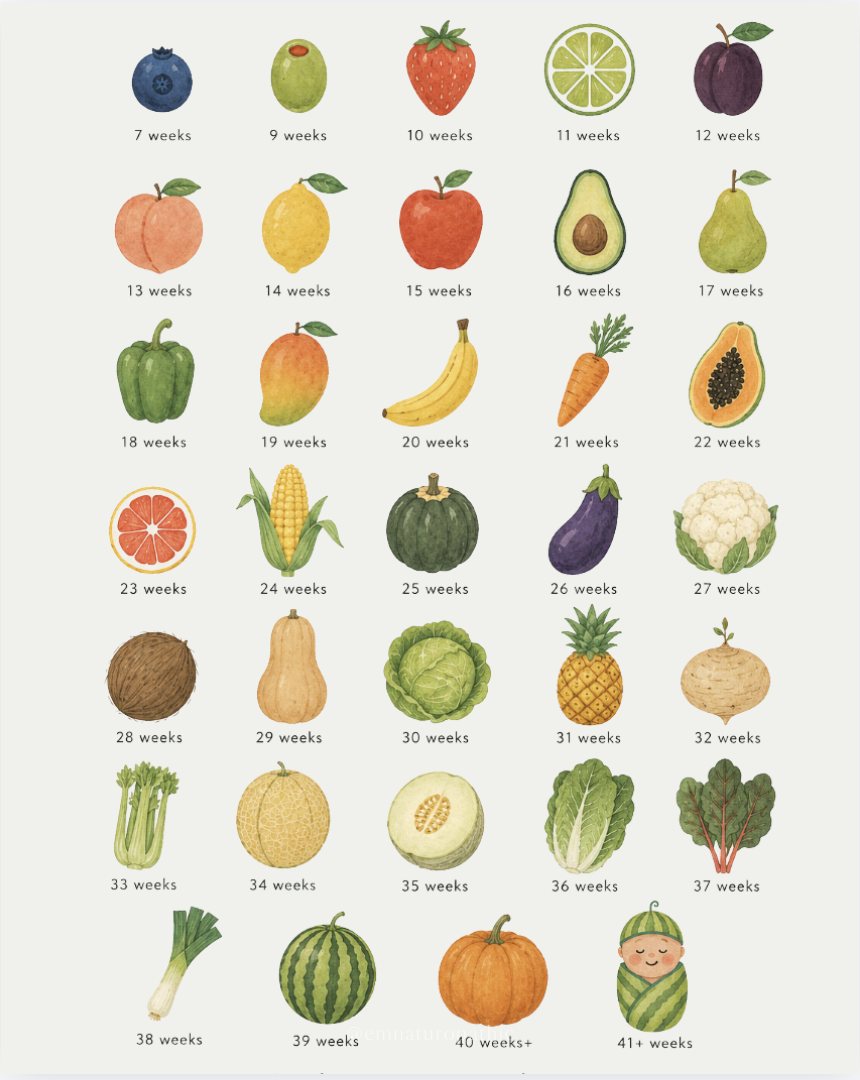
The Incredible Wisdom of the Pregnant Body
It can be fun to compare your growing baby to a blueberry, an avocado, or a watermelon. These little milestones give us something tangible to celebrate as pregnancy unfolds week by week. But these comparisons represent something far more extraordinary than size. Every single week, your body is quietly creating an entirely new human being.
Long before you ever feel the first kick, hear the heartbeat, or hold your baby in your arms, your body has already begun orchestrating one of the most remarkable processes in all of creation. Without conscious thought, without instructions, and without you ever needing to remember the next step, your body simply knows.
From One Cell...
Every one of us began as a single fertilized cell. Within hours, that tiny cell begins dividing. One becomes two. Two become four. Four become eight. Before long, hundreds of cells are multiplying, communicating, and organizing themselves with astonishing precision.
Soon after, your tiny baby nestles into the lining of your uterus, where an extraordinary partnership begins. At the very same time your baby is developing, your body is transforming itself to support this new life. Hormones begin shifting. Blood vessels expand. Your immune system adapts in remarkable ways. Nutrients are redirected. Nearly every system in your body begins working together toward one shared purpose: helping your baby grow.
It is easy to overlook the significance of this because so much of it happens quietly. You cannot feel every cell dividing or every hormone changing. Yet beneath the surface, millions of beautifully coordinated processes are unfolding every second, each one contributing to the incredible work of creating new life. Every heartbeat, every new organ, every tiny limb, and every intricate neurological connection begins with the remarkable intelligence woven into both mother and baby.
Your Body Grows an Entirely New Organ
One of my favorite pregnancy facts is that your body grows an entirely new organ: the placenta.
Although temporary, the placenta is one of the most remarkable organs your body will ever create. It delivers oxygen and nutrients to your baby, removes waste products, produces hormones that sustain pregnancy, supports immune function, and serves as an extraordinary communication center between mother and baby. It continually adapts throughout pregnancy, responding to your baby's changing needs while coordinating an intricate exchange between two completely separate circulatory systems without allowing their blood to mix.
Perhaps most incredible of all, your body knows exactly when its work is complete. After your baby is born and the placenta has faithfully sustained life for months, it gently separates and is delivered, having fulfilled its purpose. Temporary. Purposeful. Beautifully designed.
Every Week Brings Another Miracle
When we think about pregnancy, it's easy to focus on how big the baby has become. But growth is only part of the story.
Around five weeks, a tiny heart begins beating. Soon tiny fingers and toes begin taking shape, bones gradually strengthen, and delicate facial features begin to emerge. Before long, your baby's ears become capable of hearing your voice, tiny eyes begin responding to light, taste buds develop, sleep cycles emerge, and the lungs continue maturing in preparation for their very first breath.
Meanwhile, millions upon millions of new brain connections are forming every single day. These connections will one day allow your child to learn, communicate, solve problems, experience emotions, create memories, and build meaningful relationships. Scientists estimate that during certain stages of fetal development, neurons are produced at astonishing rates as the brain rapidly organizes itself into one of the most complex structures in the known universe.
Every week introduces another incredible milestone. Behind each of those milestones is a mother's body faithfully providing exactly what that developing baby needs at exactly the right time.
Pregnancy Isn't Passive
Sometimes pregnancy is described as though the baby is simply growing on its own. But that isn't the whole story.
Your baby is growing because your body is actively supporting every moment of that development. Your blood volume increases dramatically to deliver oxygen and nutrients to both you and your baby. Your heart pumps harder. Your kidneys filter more blood. Your lungs adapt to changing oxygen demands. Your metabolism shifts to support new life. Your ligaments gradually soften in preparation for birth. Even your breasts begin preparing to nourish your baby long before they ever arrive.
Nearly every organ system in your body changes during pregnancy, not because your body is struggling, but because it is adapting with remarkable precision to meet the needs of another human being. Pregnancy isn't passive. It is one of the clearest demonstrations of the body's innate intelligence and extraordinary capacity for adaptation.
The Wisdom of Physiology
As a Vitalistic Naturopathic Doctor, one of the foundational principles that continues to inspire me is the incredible wisdom of the human body.
Our bodies are not simply machines made up of separate parts. They are living, dynamic systems with an extraordinary capacity to heal, adapt, regulate, and grow. Pregnancy is perhaps one of the most beautiful reminders of this truth.
Your body doesn't wake up each morning wondering how much blood volume it should increase today. It doesn't need to be reminded when your baby's fingers should begin forming or when the lungs should start preparing for that very first breath. It doesn't require conscious instructions to build a placenta, adapt your metabolism, regulate hormone production, or coordinate the thousands of biological processes occurring every moment throughout pregnancy.
There is a remarkable intelligence woven into every stage of this journey.
As healthcare providers, our role isn't to replace that intelligence. It is to understand it, respect it, and support it.
This is one of the reasons I fell in love with naturopathic medicine. Rather than viewing the body as something that is constantly failing or waiting to become sick, we recognize that it is continually working toward balance, adaptation, and healing. Pregnancy beautifully illustrates this principle. Nearly every change your body makes during these forty weeks is purposeful, intentional, and designed to support both you and your growing baby.
That doesn't mean pregnancy is always easy or that complications never occur. Prenatal care, nourishing food, restorative sleep, joyful movement, stress reduction, supportive relationships, and collaborative healthcare all play important roles in supporting a healthy pregnancy. Modern medicine has also transformed maternal and infant care, saving countless lives when genuine complications arise. I am deeply grateful for those advances.
But I also believe we've created a culture where many women are taught to question their bodies before they've ever been given a reason to trust them. Somewhere along the way, we've become so focused on what might go wrong that we sometimes forget to marvel at everything that is going right every single day, millions of times over.
Pregnancy invites us to rediscover that trust. Not a blind trust that ignores concerns or avoids medical care, but a deep respect for the remarkable intelligence built into the female body and the incredible design that allows new life to grow. As Ina May Gaskin has spent decades reminding women, pregnancy and birth are normal physiological processes, not illnesses. When we begin from a place of respect for physiology, everything about the experience begins to shift. Fear slowly makes room for curiosity. Anxiety begins making room for confidence. We stop seeing our bodies as problems to solve and begin recognizing them as extraordinary partners in the journey of bringing new life into the world.
Pregnancy Can Be Beautiful and Hard
Recognizing the beauty of pregnancy doesn't mean pretending it's always easy.
Pregnancy can be exhausting. There may be nausea, food aversions, pelvic pain, heartburn, insomnia, swelling, or moments of uncertainty. Some days may feel incredibly long, while others seem to pass before you've had the chance to appreciate them. Pregnancy stretches us physically, emotionally, mentally, and spiritually in ways few other experiences can.
And yet, even on the hardest days, your body continues its quiet work. Your placenta continues nourishing. Your baby's heart continues beating. Tiny bones continue growing stronger. Millions of new brain connections continue forming. Life continues unfolding beneath the surface, even when you don't feel your best.
Two things can be true at the same time. Pregnancy can be incredibly challenging, and it can still be one of the most extraordinary things your body will ever do.
A Gentle Reminder
The next time you open your pregnancy app and discover your baby is the size of a peach, an avocado, or a pumpkin, I hope you pause for just a moment. Not because of the fruit, but because of everything that fruit represents.
It represents a tiny heart that has already beaten millions of times. Developing lungs preparing for that very first breath. A growing brain forming millions of new neural connections every single day. Tiny fingers that will one day wrap around yours. Little feet that will one day take their first steps. A beautiful little person who, at this very moment, is being lovingly nurtured by your body.
One day your baby will be born. Family and friends will admire their tiny nose, their little fingers, and their perfect toes. But long before anyone else ever held your baby, your body quietly carried out one of the greatest acts of creation imaginable. It grew the placenta that sustained them. It nourished every organ. It protected them. It adapted, sacrificed, and transformed so they could continue growing safely within you.
What an incredible gift it is that our bodies were designed with the wisdom to nurture new life from a single fertilized cell into a beautiful baby over the course of forty weeks.
There is nothing ordinary about that.
So the next time you catch a glimpse of your growing belly, I hope you're reminded of something far more meaningful than what week you're in. I hope you're reminded of the miracle unfolding within you, of the incredible wisdom of the pregnant body, and of the beautiful little person you're preparing to meet.
One tiny heartbeat, one tiny kick, and one tiny week at a time.
🤍
If this article encouraged you to see your pregnancy with fresh eyes, my hope is that it also reminded you that you don't have to navigate this season alone.
One of my greatest passions as a Vitalistic Naturopathic Doctor is helping women understand the incredible physiology of pregnancy so they can move through this season with greater confidence, deeper peace, and an appreciation for the remarkable wisdom God designed into both their bodies and their growing babies. Whether you're hoping to conceive, are already expecting, or are preparing for your baby's birth, I'd be honored to walk alongside you.
I currently offer three ways to work together:
🌿 Preconception & Pregnancy Preparation — for women who are preparing their bodies before conception and want to optimize their health before pregnancy.
🤰🏼 Pregnancy Support Container — comprehensive support throughout pregnancy with individualized naturopathic care, education, nutrition, birth preparation, and ongoing guidance as your pregnancy unfolds.
👶🏻 Personalized Birth Planning & Support — ideal for families in the later weeks of pregnancy who want evidence-informed education, personalized birth planning, and support as they prepare for labor, delivery, and the early postpartum transition.
If one of these feels like the right fit for you, I'd love to connect. Simply text (619) 630-8730 with your name, your due date (or desired conception date), and which offering you're interested in. I'll personally reach out to schedule a complimentary call so we can get to know each other and determine whether we're a good fit.
It would be a privilege to support you during one of the most meaningful seasons of your life.

Human babies are designed for connection.
Human babies are biologically designed for closeness. Discover how skin-to-skin, responsive caregiving, secure attachment, and co-regulation help shape lifelong emotional and physical health while fostering healthy independence.
Why Human Babies Are Designed for Connection
For generations, parents have been told that babies need to learn independence as early as possible. Put them down. Let them self-soothe. Don't hold them too much. Don't respond too quickly.
But when we step back and look at human biology, infant development, and even the way babies have been raised throughout history, a very different picture begins to emerge.
Human babies aren't born expecting independence.
They're born expecting connection.
Human Babies Are Different
Compared to nearly every other mammal, human babies enter the world remarkably immature. Much of their brain development takes place after birth, which is why many experts describe the first few months of life as the "fourth trimester."
For nearly ten months, your baby knew only one environment: your heartbeat, your voice, your warmth, the gentle rhythm of your movements, and the sound of your breathing.
Then, almost overnight, they're introduced to bright lights, unfamiliar sounds, changing temperatures, and a completely new world. It's no surprise that they continue seeking the one place they've always known to be safe: You.
Your Baby Borrows Your Nervous System
Newborns don't yet have the ability to regulate their own emotions the way older children and adults do. Instead, they rely on us.
When we hold them close, speak gently, make eye contact, nurse, or practice skin-to-skin contact, we're helping regulate their heart rate, breathing, body temperature, and stress response. This process is known as co-regulation.
Your calm becomes their calm. Your steady heartbeat helps regulate theirs. Your voice becomes a reminder that they're safe.
Far from creating dependency, these repeated moments of comfort help build the neurological foundation that eventually allows children to regulate themselves.
Secure Attachment Is the Goal
One of the greatest gifts we can offer our children isn't early independence.
It's secure attachment.
Secure attachment develops when babies consistently experience caregivers who respond to their needs with warmth, sensitivity, and love. Over time, they begin to believe something incredibly important:
The world is safe.
My needs matter.
Someone will be there when I need them.
Psychologists often describe parents as both a safe haven and a secure base. We provide comfort when our children feel overwhelmed while also giving them the confidence to gradually explore the world around them.
This doesn't require perfect parenting. Secure attachment isn't created because parents never miss a cue or always respond perfectly. It develops through consistent, loving, responsive care over time.
Closeness Doesn't Spoil a Baby
One of the most common concerns I hear is:
"Am I creating bad habits by holding my baby too much?"
The research on infant attachment suggests otherwise. Babies are biologically wired to seek closeness because closeness promotes safety.
Holding your baby, responding to their cries, wearing them in a carrier, enjoying contact naps, and practicing skin-to-skin aren't signs of weakness or "spoiling." They're normal ways of nurturing a developing nervous system while strengthening the parent-child bond.
Across many Indigenous and traditional cultures throughout history, babies spent much of their day being held, worn, or kept close to their caregivers. Constant physical proximity wasn't viewed as unusual. It was simply part of raising a human baby.
What About Sleep?
Sleep is one of the most personal decisions every family makes, and there is no one-size-fits-all approach.
Throughout history and across many cultures, babies have slept close to their mothers. For many families, bedsharing allows for easier nighttime breastfeeding, more frequent opportunities for connection, and increased responsiveness to their baby's needs. Some research also suggests that, when practiced safely, close nighttime proximity may support breastfeeding and help strengthen the parent-child bond.
At the same time, every family's circumstances are different, and bedsharing is not appropriate or safe in every situation. If your family is considering bedsharing, I encourage you to become familiar with current safe sleep recommendations, including the Safe Sleep Seven, so you can create the safest possible sleep environment for your baby.
Whether your family chooses room-sharing, bedsharing, or another sleep arrangement, my hope is that your decision comes from thoughtful education rather than fear. Every family deserves access to balanced information so they can make informed choices that support both safety and connection.
Independence Grows From Security
Perhaps the greatest misconception about attachment is that responding to our babies somehow prevents them from becoming independent.
In reality, the opposite is often true.
Children who experience secure attachment develop the confidence to explore because they know they have a safe place to return. They don't become independent because they were pushed away.
They become independent because they first experienced deep connection.
Simple Ways to Foster Secure Attachment
You don't need elaborate parenting strategies to support healthy attachment. Small, everyday moments matter most.
Practice skin-to-skin whenever possible.
Respond to your baby's cues with warmth and consistency.
Wear your baby in a carrier throughout the day.
Enjoy contact naps when they work well for your family.
Consider room-sharing or safe bedsharing, when appropriate and desired, by following evidence-informed safe sleep recommendations.
Make eye contact during feedings.
Read, sing, and talk to your baby often.
Spend unrushed time simply enjoying one another's company.
These seemingly ordinary moments are quietly shaping your child's sense of safety, trust, and belonging.
Final Thoughts
The goal isn't to raise a child who never needs you.
The goal is to raise a child who knows, from the very beginning, that they are deeply loved, consistently cared for, and safe in your presence.
Connection isn't the opposite of independence.
It's the foundation that makes healthy independence possible.
So if your baby wants to be held a little longer, snuggled a little closer, or comforted one more time, remember this:
Human babies were never designed to thrive in isolation.
They were designed to thrive in relationship.
And for a little while, you are their whole world. 🤍